The thought of having friends visit has never felt real, even though I’ve known for months that Jess and Zack were coming across the world to see me. In many ways my life in Zambia has been a separate reality from everything I knew back home, something that disoriented me when visited the States for Christmas. Communicating with family and friends is helpful and necessary, but in the end there is only a certain point of understanding that can be reached…not because of lack of effort, but simply due to the fact that you can’t really understand Zambia unless you’ve seen it, experienced its bizarre yet strangely addicting contradictions.
The week before Jess and Zack arrived, KF received news that out of 20 Zambian finalists for African Leadership in Academy, 9 were from our program. This meant that, for the first time, Zambia would host a finalist weekend. ALA would be coming to Lusaka to evaluate all 20 students based on a number of team activities, group discussions, personal interviews, and examinations. The fact that ALA had never conducted a weekend here left them in a difficult place, and I and KF offered to assist in the planning process. This meant recruiting interview observers from the community, finding a school to host (which ended up being Leopards Hill, one of our partner schools, which boasted 6 of the 9 finalists), and, perhaps most importantly, assisting our students in the application process and preparing them for the difficult yet sure to be moving experience of an ALA finalist weekend. Prior to my friends’ visit I had worked hard to finish a good amount of work so that I could spend a substantial amount of time with them. But this is Zambia, and this is the reality of work with a small but ambitious organization. Work comes in waves, and sometimes, as with ALA, in tidal waves. ALA gave our students 2 weeks to prepare applications, which included longer essays, teacher and community recommendations, extensive financial and visa forms, and examination results. Having visited ALA in December, I understood the uniqueness of this opportunity, and the life-altering experience that an acceptance would be for any of our students. Furthermore, it would almost certainly be a triumph for KF, which has yet to graduate a grade 12 student and is in the process of navigating through the infuriatingly mess process of college and scholarship applications for disadvantaged Zambian students.
My boss was away in Europe, and I jumped at the opportunity to spearhead this process. KF sprang into action, and it was amazing to see how the essential gears that fuel this organization set into place. Our accountant volunteered to collect the financial and visa information from all 9 families, while our programs officer embarked on the surprisingly difficult task of acquiring effective recommendations from teachers, mentors, and other community members. I chose to help our students with the applications, as well as prepare them for the interview weekend.
Then Jess arrived. Jess is one of my best friends from Bowdoin, and is working in Guatemala City for Safe Passage—the organization that introduced me to international service and educational access while at Bowdoin. She had never been to Africa, but I was confident that she would embrace this experience in every way possible. Seeing a familiar face from my other life walk out of the terminal was more shocking than I had imagined; at that moment, I felt my two worlds colliding and meshing together in a way that I had never experienced. I felt exhilarated, and then, suddenly, eternally grateful. That I would be able to share my world with somebody very close to me, but more importantly, that I was fortunate enough to have best friends who would fly across the world to see me. After a long hug we walked out to my car, and I was already feeling giddy at the thought of driving her back to the city, about letting her into this life that has for whatever reason always felt so separate. We went to the Sunday Market at Arcades, met my roommate Oliver, and then headed back to my flat on the other side of town. Maxime (another Bowdoin grad) came over, and we sat on my porch sharing experiences, reminiscing about Bowdoin, and enjoying the cool April air as the sun sank lazily over the palm trees in my yard. Catching up with Jess was so important to me…we are both having very similar experiences, working for similar organizations, and have the benefit of sharing similar career goals, and it was fascinating to compare and contrast the social realities in our respective countries, to admit to mistakes and disappointments, and to share our successes and achievements.
I didn’t really give Jess much time to adjust (or to sleep…). She was in Zambia for the first time, and there was so much I wanted to show her. The next day we drove out to Chibelo Basic School, the small, underfunded, yet progressive school met where KF began. While waiting for our host, I took Jess to visit the Mwenes, a KF family that lives on the Chibelo campus (our student’s father is a teacher at the school). The Mwenes are a n unbelievably warm and generous family, and we sat with Mrs. Mwene and her two daughters for a while, Jess telling them about her life in the States and in Guatemela, and them teaching her bits and pieces of Nyanja and Tonga (Jess is a language guru, so she learned rather quickly.) After an hour or so Constance, a special education teacher at the Chibelo who worked with Oliver to lay the groundwork for KF, arrived. She took us around the school and told us the story of KF’s inception when our president was here as a Princeton in Africa Fellow, and then we headed to Kalikiliki, the compound in which most of Chibelo’s students live. Constance is an amazingly bright and powerful woman, and she spoke passionately about the struggling children and families that live in Kalikliki (meaning busy, in Nyanja), the many social problems that afflict Lusaka’s poorest communities, and the fundamental flaws in Zambia’s educational system. After that we took Constance to lunch, where she told us about her life, her husband who went to America and left her to fend for herself and her daughter alone, her goal to return to university and complete a degree, and her faith in the resiliency of her family and of her fellow community members.
After that I put Jess to work…we went to the office, printed out materials for the essential meeting I had planned with our ALA finalists, and headed out to pick some of them up. The point of the meeting was on the applications and on the Interview preparation process. Jess was incredibly helpful, and it was so nice to see her automatically being welcomed into the KF family. Our students absolutely loved her, and felt comfortable around her right away. These students have defined my experience here. They have impacted my life in a profound and permanent way, and seeing the ease with which my friend connected with them meant more to me than I can express. After the meeting, Jess and I drove some of our students back home, taking an eerie shortcut through the Lusaka night over dusty, pot-hole laden dirt roads that wind through the compounds. One would think that would be enough for someone’s first day in Africa, but to top it all off, we went to a Passover Seder at the Grassroot Soccer House (which was a great way for her to meet many of my closest friends).
The next day we went to the Tuesday vegetable market, bartered like crazy, and acquired all manner of fruits and vegetables for dinner. After stopping by Kamwala (a busier market near town) for some chitenge (Jess wanted to make a dress, I wanted to make a bag for my bongo). We grabbed lunch with some friends at my favorite local nshima restaurant (which serves all sorts of local vegetables, game meats, and more). Then we headed back home and prepared for dinner with Steve and Alla (fried pumpkin with brown sugar, fresh salad with tomatoes and avocados, mango chutney pork). There’s something inherently refreshing about shopping and making dinner with fresh ingredients from the market, something I will greatly when I leave Africa.
Wednesday was full of errands…dropping off chitenge at the tailor (a toothless man with an ancient sewing machine and an umbrella parked outside a shopping complex near my house), getting a goodbye present for my roommate who was leaving, and packing my things so I could move out the next day (they really did come at the busiest possible time!). I also brought Jess to two of our schools, introduced her to some of the teachers and staff. Everyone took to her right away, and Mrs. Lungu, who was about to embark on a trip to Spain, was eager to get Jess’s advice (she had spent a full year there studying abroad). Again, I remember feeling so relieved at how easy all of this was…somehow, it was beginning to feel completely and totally natural, as if Jess had been living in Zambia for months.
That night we went to a goodbye dinner for Oliver at Mahak (our favorite rundown Indian restaurant with famous for its all you can eat, who was leaving Zambia the next day. It was unfortunate that he was leaving in the middle of all this craziness…Oliver had been such an important part of my life here; we came in at the same time and went through much the adjustment process together. I was fortunate to have him here. I know he will be a close friend for the rest of my life, but it was still strange and difficult to accept that the first of my core sources of support here was leaving. I had to leave soon after we arrived to pick up Zack, who was getting in that night. I have known Zack since the third grade, and he has been my best friend ever since. For me Zack is one of the people who, no matter how long we go without speaking, somehow things never change. And the randomness with which he decided to come was strangely fitting…one day I got a message saying…”when would be the best time to come see you?” A week later he forwarded me his flight itinerary. That simple. Zack is currently on an epic trip across the world before he starts medical school at Cincinnati, and a first trip to Africa (and any developing region) was first on his list. On the way there I got a call from him saying that he had cleared customs and was all set (which was weirder than I had expected…to hear Zack’s voice on a phone in Zambia). I rushed to the airport and picked up my best friend. Again, I felt this wave of gratitude and disbelief. I felt like things were coming together, that pieces of my very disconnected life were being fused together in an unexpectedly intentional way.
We launched into conversation, driving down the pitch black road toward town. Again, I didn’t give my friend much (or any time) to adjust, driving straight back to dinner, where Zack met all of my friends and listened, exhausted, to silly yet heartfelt goodbye speeches.
The next morning I woke up early to bring Oliver to the airport. The sun was rising, and we had one last epic car ride to Springsteen’s live version of Atlantic City in New York. It was hard to say goodbye, but I was lucky enough to have my best friends there waiting for me at home.
Zack was jetlagged, and unsurprisingly, awake at 7 am, so we went for a run down my favorite tree-lined path down Independence Avenue past the State House. I told him everything, about my life, about Zambia, about my kids, about the frustrations and joys I had experienced over the past 10 months. When we got back to the house Jess was awake, so we took a walk to the only café in Zambia that sells bagels, enjoying the bright sunlight easy lull of the late Lusaka morning. I still had work to do, so I enlisted Zack to help. We met Edna, Bwalya, and Gaella in Garden Compound to collect applicants and visit some of my students families at their homes. Zack and Jess got along with my students so easily, and it was wonderful introducing them to the families and communities that had come to define my life here. There was a moment I remember when Zack and Jess were crammed into the back of my SUV with two of my students as we navigated the bumpy and treacherous dirt road (perhaps moving a little too quickly, considering we were bobbing up and down uncomfortably). Everyone was laughing and joking (mostly at my expense), and I suddenly couldn’t help but feel like this unpredictable yet steady logic that had come to define my post-college life was somehow there, in that car, with two of my best friends in the entire world, and three of KF’s most unique students. Somehow it all made sense, my life and all of its contradictions, its bumps and unexpected turns.
We spent the rest of the night moving out of my house into my new place, making copies of the students’ applications to hand out to a Zambian volunteer for review, and packing for Livingstone and Kariba. The week had been absolutely packed, and it would only get busier.
More to come…
Wednesday, May 25, 2011

Thursday, April 7, 2011
Three Months Left...Time to Reflect

If the first nine months of my fellowship were centered on getting to know Kucetekela as an organization, the last two have focused on examining the implications of the foundation within the Zambian educational system. One of my primary responsibilities in Lusaka has been to conduct a long-term impact analysis that seeks to assess the actual effect our sponsorship has had on the financially disadvantaged students and families that we support. After meeting with 31 families at their homes, I began to notice some interesting trends—parents were somehow able to put food on the table, siblings were back in school and working extra hard to emulate their older brother or sister, students from these communities were being inspired to believe that they too could someday earn a sponsorship. My student survey showed me that our students at our three partner private boarding schools were improving their IT, public speaking, and leadership skills, getting actively engaged in their studies and in student life at their schools, and growing more and more confident about their futures. After dozens of visits to ministries and government basic and secondary schools and interviews with previous unsuccessful applicants, I began to observe some different, more disheartening trends. Students at these schools were struggling—lack of text books and often desks to study from, classrooms packed full with 60+ students, teachers that were underpaid and overworked and uninspired. And at the end of the day, if one was lucky enough to pass their grade 12 exams with the marks needed for college, they were faced with the pressing reality that tertiary scholarship opportunities for low-income students, due to a monumental failure on the part of the government to invest in the future higher education, were exceedingly difficult to acquire. It was at this point that I believe I fully understood the implications of KF and the opportunity it offers to its students. We are investing in a small group of potential leaders, providing them with the support and guidance that they need to flourish, and supplying them with the tools needed to perform well enough to earn those elusive scholarships that many Zambian students struggle to attain. And it is our hope that these students, having worked their way through countless obstacles, will remember that there are thousands of students like them that need their leadership in paving the way forward.
Among many, many things, my fellowship with Kucetekela Foundation has reaffirmed my belief that education is the foundation, the lifeblood of a healthy society, and if it is not effectively distributed to all members of society than it can’t perform its most vital functions. And the essential power of education does not stop at basic or secondary level. Access to quality higher education is just as important in developing the sorts of leaders who can instigate the changes that countries like Zambia so desperately need. My work in Zambia has put a personal face to this incredible power—the amazing students, their tenacious, resilient families, the mentors who care so deeply about their students and their successes, and the hope that scholarship aid can bring—and a policy face—that developing countries must invest in access to education in order to foster successful development. It may be truly impossible to accurately portray the level of influence this year has had upon my life—the relationships which I will always treasure, the friends I have met, the challenges I have struggled through, the discoveries, both discouraging and enlightening, that I have made. My fellowship has carved for me a new, exciting, and fundamentally real path, one that has been molded by my unique experiences in this tragic yet beautiful country. It has proven to me that changing lives and changing policy can actually be intimately connected and has inspired me to continuing learning about and advocating on behalf of equal access to education, both across Africa and at home, into the future.
Monday, March 14, 2011
Zambia can do this to you. Lift you up and slam you down within the period of a day and a half. It’s an exhausting yet inevitable reality of working in one of the poorest countries in the world, one that is plagued by dilapidated educational and desperate health care systems. And it’s bound to hit you harder when you work with the people who are impacted most by these failures.
This weekend we received the news that the father of one of our grade 8 students, a fiery, resilient girl who we just selected in December, passed away. He was in his low 40s. The cause of death, as usual, seems to be shrouded in mystery. I understand that death, even at young ages, is not a novel concept in the West. But there is just something inherently wrong about the way death seems to creep into people’s lives here. It moves slowly, stealthily, so much so that you might have no idea it’s coming before it’s too late. Or, it strikes randomly, unforgiving, on a Sunday when your family is at church. Either way, it’s rarely expected, and there is often no way to counteract it. Nobody ever seems to see it coming. And yet, there is this general acceptance, a resigning to it. People work so hard. They struggle for everything they have…the Zambians I have met here, particularly in the compounds, are some of the most tenacious people I have ever encountered. Yet, death in many ways is let in and it invades their personal lives and the many things they have worked so hard to build. Death, for many Zambians, is as much part of everyday life as eating breakfast, or going to work from nine to six.
This of course if not to say that people don’t mourn. That is not the case at all. I spent an entire morning and afternoon with my coworker Mwila as part of the funeral procession, and it was clear to me that this man would be greatly missed by his entire community. Funerals usually begin at the house of the deceased, or a close relative’s house. The men usually sit outside while the women are let into the house to be with the widow. From there, cars and trucks process from the house to the burial site (much like what we do in the States). As part of many Zambian processions, friends and relatives will sit or stand in the back up a large pickup truck (sometimes 50-60 people will fit onto one truck) and sing traditional songs as the row of cars makes its way through the city. I see these processions every single day as I drive throughout Lusaka, but being part of it, knowing the person whom these people were mourning, gave me a deeper appreciation for the tradition. It made something that is often commonplace, part of the sights and sounds of the city, inherently unique. Personal. We arrived at the cemetery—a massive, sprawling field of, muddy, puddle-dotted roads, overgrown grass, and occasional graves (some expensive-looking, others makeshift signs with personal notes scrawled across them). We parked, and I suddenly realized how many people were actually present. There must have been four or five hundred people there, men, children, and women whose vibrant chitenge dresses formed a sharp contrast with the bleak scene. We streamed to the grave site, and women broke into song as the coffin was carried to the ground. Men gave speeches in Nyanja, women wailed, and my heart broke for our student, so young and bright, now a single orphan at thirteen years old. I tried to think back to our interview, when I met her parents, her father so calm and proud and humble, a rare university graduate, her mother excited and hopeful, their daughter so confident and eloquent. I remembered their faces when we delivered the good news, that she had been picked for a scholarship—the disbelief, then the glowing smiles and tears of joy. And suddenly everything had changed. In the period of two days. Death poisoned the momentary optimism the family had enjoyed.
I felt deflated for the rest of the day. I gave our student a hug, told her to hang in there and take her time, knew that whatever I said would not do a thing to ease this pain or solve the pressing reality of the situation—that the family’s sole breadwinner was now gone. It’s foolish and arrogant to assume that what is the same for many Zambians was the same for this man. He got sick and passed away, and I have no indication that he died of anything other than natural causes. But the sudden death of a member of our small family was a harsh reminder of the ever-present threat of death and disease that permeates Zambian society. Yes, it is true that part of why people are always attending funerals is because the Zambian extended family goes on and on and on, so that your odds of being invited to a funeral are greatly improved. Still, what I have found most exhausting and disheartening is this sense of mystery around death and its causes, this unwillingness that I’ve observed in many people to confront its root causes, or this lack of information that many, particularly those in the compounds, have about disease and ways to prevent it, about how and where to seek treatment.
And this is precisely why education is so important, why I believe so fully in it as a tool for national and social development. It’s not just that proper schooling keeps children off the street, teaches individuals about national issues, and empowers families to better their lives. Even more so, it’s that Zambia needs committed leaders dedicated to transforming a monumentally deficient health care system, individuals who have experienced the hardships that afflict three quarters of the population and can thus begin to understand how to fight back against them. It needs people who can understand how policy, behavior, and culture are intertwined, people who can earn the trust of their fellow citizens and finds ways to prevent what is preventable.
Policy makers have always neglected education. Funds are poured into health, or business development, yet the system that has the most direct influence over the lives of children and families receives next to nothing in support. Education is the foundation, the lifeblood of a healthy society, and if it is not effectively distributed to all members of society than it can’t perform its most vital functions. And the essential power of education does not stop at basic or secondary level. Access to quality higher education is just as important in developing the sorts of leaders who can instigate the changes that countries like Zambia so desperately need. It is a natural extension, an invaluable next step for those who take educational development seriously.
To my knowledge, the last time scholars convened about higher education development, it was in 2000. This article, in my opinion, hits the nail on the head, but it needs an update, and needs to be taken more seriously (up to now it has not).
http://siteresources.worldbank.org/EDUCATION/Resources/278200-1099079877269/547664-1099079956815/peril_promise_en.pdf
Despite the many frustrations of living here, the times when I have felt my beliefs being shaken, what has remained constant is my faith in the power of education, particularly for those who are most vulnerable.
Today I was reminded of the darkness that rests beyond the vibrancy and energy of life in Zambia. I was reminded of all that I have and all that I should be grateful, for a family that I can always rely on for love and support, for friends who have always been there, for the opportunities I have been blessed with. And, I was reminded of why I chose to dedicate a year of my life to this cause.
This weekend we received the news that the father of one of our grade 8 students, a fiery, resilient girl who we just selected in December, passed away. He was in his low 40s. The cause of death, as usual, seems to be shrouded in mystery. I understand that death, even at young ages, is not a novel concept in the West. But there is just something inherently wrong about the way death seems to creep into people’s lives here. It moves slowly, stealthily, so much so that you might have no idea it’s coming before it’s too late. Or, it strikes randomly, unforgiving, on a Sunday when your family is at church. Either way, it’s rarely expected, and there is often no way to counteract it. Nobody ever seems to see it coming. And yet, there is this general acceptance, a resigning to it. People work so hard. They struggle for everything they have…the Zambians I have met here, particularly in the compounds, are some of the most tenacious people I have ever encountered. Yet, death in many ways is let in and it invades their personal lives and the many things they have worked so hard to build. Death, for many Zambians, is as much part of everyday life as eating breakfast, or going to work from nine to six.
This of course if not to say that people don’t mourn. That is not the case at all. I spent an entire morning and afternoon with my coworker Mwila as part of the funeral procession, and it was clear to me that this man would be greatly missed by his entire community. Funerals usually begin at the house of the deceased, or a close relative’s house. The men usually sit outside while the women are let into the house to be with the widow. From there, cars and trucks process from the house to the burial site (much like what we do in the States). As part of many Zambian processions, friends and relatives will sit or stand in the back up a large pickup truck (sometimes 50-60 people will fit onto one truck) and sing traditional songs as the row of cars makes its way through the city. I see these processions every single day as I drive throughout Lusaka, but being part of it, knowing the person whom these people were mourning, gave me a deeper appreciation for the tradition. It made something that is often commonplace, part of the sights and sounds of the city, inherently unique. Personal. We arrived at the cemetery—a massive, sprawling field of, muddy, puddle-dotted roads, overgrown grass, and occasional graves (some expensive-looking, others makeshift signs with personal notes scrawled across them). We parked, and I suddenly realized how many people were actually present. There must have been four or five hundred people there, men, children, and women whose vibrant chitenge dresses formed a sharp contrast with the bleak scene. We streamed to the grave site, and women broke into song as the coffin was carried to the ground. Men gave speeches in Nyanja, women wailed, and my heart broke for our student, so young and bright, now a single orphan at thirteen years old. I tried to think back to our interview, when I met her parents, her father so calm and proud and humble, a rare university graduate, her mother excited and hopeful, their daughter so confident and eloquent. I remembered their faces when we delivered the good news, that she had been picked for a scholarship—the disbelief, then the glowing smiles and tears of joy. And suddenly everything had changed. In the period of two days. Death poisoned the momentary optimism the family had enjoyed.
I felt deflated for the rest of the day. I gave our student a hug, told her to hang in there and take her time, knew that whatever I said would not do a thing to ease this pain or solve the pressing reality of the situation—that the family’s sole breadwinner was now gone. It’s foolish and arrogant to assume that what is the same for many Zambians was the same for this man. He got sick and passed away, and I have no indication that he died of anything other than natural causes. But the sudden death of a member of our small family was a harsh reminder of the ever-present threat of death and disease that permeates Zambian society. Yes, it is true that part of why people are always attending funerals is because the Zambian extended family goes on and on and on, so that your odds of being invited to a funeral are greatly improved. Still, what I have found most exhausting and disheartening is this sense of mystery around death and its causes, this unwillingness that I’ve observed in many people to confront its root causes, or this lack of information that many, particularly those in the compounds, have about disease and ways to prevent it, about how and where to seek treatment.
And this is precisely why education is so important, why I believe so fully in it as a tool for national and social development. It’s not just that proper schooling keeps children off the street, teaches individuals about national issues, and empowers families to better their lives. Even more so, it’s that Zambia needs committed leaders dedicated to transforming a monumentally deficient health care system, individuals who have experienced the hardships that afflict three quarters of the population and can thus begin to understand how to fight back against them. It needs people who can understand how policy, behavior, and culture are intertwined, people who can earn the trust of their fellow citizens and finds ways to prevent what is preventable.
Policy makers have always neglected education. Funds are poured into health, or business development, yet the system that has the most direct influence over the lives of children and families receives next to nothing in support. Education is the foundation, the lifeblood of a healthy society, and if it is not effectively distributed to all members of society than it can’t perform its most vital functions. And the essential power of education does not stop at basic or secondary level. Access to quality higher education is just as important in developing the sorts of leaders who can instigate the changes that countries like Zambia so desperately need. It is a natural extension, an invaluable next step for those who take educational development seriously.
To my knowledge, the last time scholars convened about higher education development, it was in 2000. This article, in my opinion, hits the nail on the head, but it needs an update, and needs to be taken more seriously (up to now it has not).
http://siteresources.worldbank.org/EDUCATION/Resources/278200-1099079877269/547664-1099079956815/peril_promise_en.pdf
Despite the many frustrations of living here, the times when I have felt my beliefs being shaken, what has remained constant is my faith in the power of education, particularly for those who are most vulnerable.
Today I was reminded of the darkness that rests beyond the vibrancy and energy of life in Zambia. I was reminded of all that I have and all that I should be grateful, for a family that I can always rely on for love and support, for friends who have always been there, for the opportunities I have been blessed with. And, I was reminded of why I chose to dedicate a year of my life to this cause.
Thursday, February 3, 2011
Locked In

In many ways I think going home for the holidays was one of the best decisions I’ve made since coming to Zambia. I saw family and friends, visited familiar sites, and after a couple weeks found myself craving my life and work in Lusaka. I got back on the plane eager to return to my new home, and found the country stifling hot, greener than I had ever seen it (due to heavy rainfall), lush and bustling and just as I had left it. At that moment I was surer than ever that this is where I belonged, that my next six months were going to be different, that I was refreshed and reenergized and ready to take hold of the rest of my short time here and make it into something truly great. An enormous shift has taken place in my mind…when I left in December I NEEDED to get a taste of home. It was a half-way point, a chance for me to regroup and refocus, a much needed break. But now, five months seems like five weeks. When I got back to my house, I got a call from Edna Lungu, one of our dynamic young leaders…”Mr. James, just wanted to check to see that you were back in the country.” At that moment, as I unpacked, things just clicked. Yeah, this is where I belong right now. Right here.
Much has changed since I’ve returned…we oriented five bright new students and their families to the program. We hired a new programs officer, Mwila, a young social worker from the University of Zambia who has already shown that he is going to do amazing things for KF and its kids. Mwila and I were forced to get to know each other very quickly…a week after my return we took all 36 kids on a community service and leadership retreat to a lodge about five hours north. It was another experience that ended up reminding me that I was exactly where I wanted to be…the Zambian staff leading the retreat connected so well with the students, and we spent days doing sessions on leadership, life skills, and community service project planning, mixed in with rock climbing, canoeing, problem solving, and telling stories around the campfire. I grew closer to KF during those three days. I was even given a Zambian named around the campfire…Chikumbuso, meaning “remembrance.” I think it was very fortunate that I came back to Lusaka and was immediately reminded of what I was doing there. After getting back to the city, I could already feel my mindset shifting, my nostalgia for home fading away, and my consciousness focusing almost fully on the places and people in front of me.
Things have certainly been busy…we have a new fundraising consultant who already has big plans for finding donors and expanding and improving our programs. Our grade 12s are in full swing preparing for the most important exams of their lives, and I‘ve been teaching entire history classes at one of our schools (our students tend to bring friends…many of them). Our new students seem to be adjusting well, and it always makes my day when I see them walking toward me with smiles on their faces. I can’t help but remember each of them sitting with their families several months ago, nervous and excited, hoping and praying that they would be picked.
I feel locked in. Zambia is my home right now, yet, I can’t seem to defeat this nagging realization that I am leaving in July. There are things that I have been thinking about that are new and exciting, possibilities I’ve been pondering that I never would have guessed six months ago. Yes, in six months, I have experienced a fundamental change. I am me, yet it’s a different me. Perhaps it’s more me than ever before.
Monday, December 27, 2010
A Potential Turning Point
Please forgive me for taking such a long time to update this…I suppose I could blame it on a combination of incredible busyness and stress, preparing for a very important trip home, and/or a concern that once I started writing I wouldn’t be able to stop. The last couple weeks of November were a whirlwind of constant work, confusion, and excitement—partly due to the fact that I was beginning to understand the true weight behind my experience in Lusaka so far, partly because I knew come mid December I would be home, and partly because I was beginning to think that no matter how hard I tried I would be leaving this country knowing that I could not accomplish everything I had hoped I could.
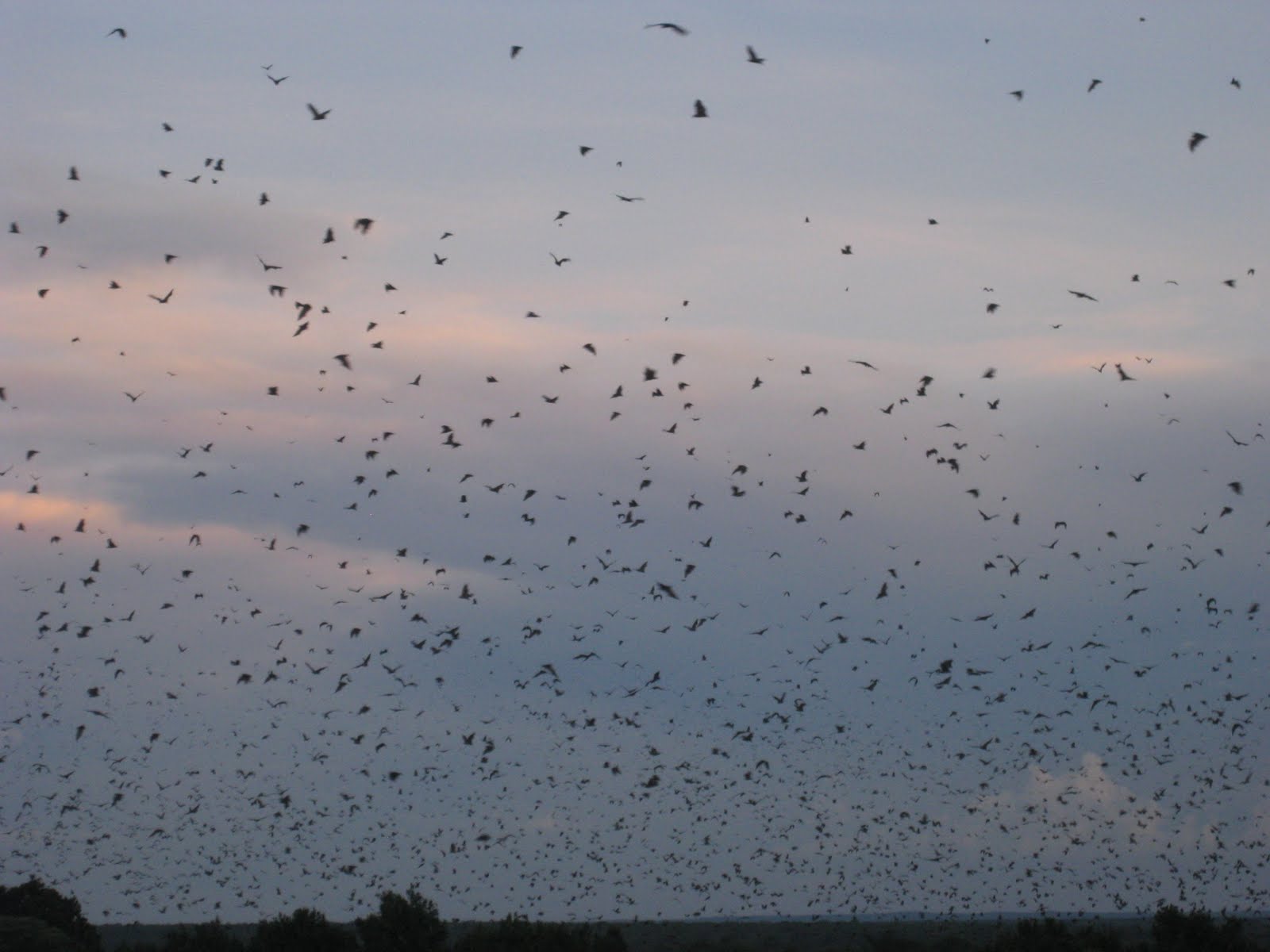
I spent Thanksgiving with my roommate, Brandon, and my landlords, and was amazed that I felt right at home (despite the fact that this was my first Thanksgiving away from Massachusetts…ever). I was lucky enough to see the famous bat migration at the end of November (one of the most spectacular things I have ever witnessed), along with the mysterious and eerie “Africa House,” a colonial mansion that was constructed in northern Zambia by an eccentric (and probably arrogant) Englishman with the hopes of putting into place his version of a British-African empire, and the hot springs that lie twenty minutes north of the grounds.

I was graced by an amazing visit by my friend Keki, my first Zambian friend that I met at the University of Cape Town, and I had a wonderful time showing her my life in the city, introducing her to students and families (Keki is, in a way, the perfect model of a successful Zambian student, on the PhD track), and talking with her about the problems I have seen so far in her country, my frustrations and disappointments, successes and goals.

It was certainly an emotionally exhausting couple of weeks…I finished 31 family interviews over about two and a half weeks, finally completed a pile of vital administrative work for KF, and participated in the final states of our student selection for January. During December, our students are supposed to be beginning/continuing their community service projects, and I am excited to see what they have accomplished when I come back. We are also hoping to have a service leadership retreat with all of the students sometime in January in order to help the students solidify their plans, reflect on the challenges they have faced, and make plans for the future. I was able to accompany Harrison in telling the students whom we picked that they were selected…this came at a very busy and stressful time, and when the first family we told erupted in a sea of joy and emotion, I was once again reminded of what makes this position so unbelievably special. After interviewing all of our families (including those of the five newly selected kids), I feel as if I am at a place where I can finally begin to understand where these students are coming from. I had some unbelievably enlightening conversations with parents and siblings about problems with access to higher education in Zambia, the challenges that kids face in the compounds, the struggles each family is confronting, still, and the hopes and dreams that they had for their child. I think it was during the month of November that I finally realized that whatever it is I do in my life, I need to be around people, interacting with families, sharing information, and learning from others on a daily basis. I think I have really had a chance to take my communication skills to a different level in Zambia, and I was very proud when my students told me that their parents and siblings found it incredibly (and surprisingly) easy to trust me right away, even though I was just a random foreigner appearing in their houses, often for the first time.
KF had to say goodbye to Harrison (who is moving on to another job), and that was difficult. He has developed and fostered such amazing relationships with these students, and I am sure it’s very hard for them to have to keep adjusting to new programs officers and new interns coming in all of the time. It’s a very tough situation. He will be missed very much by all of us. Luckily the new PO coming in, Mwila, seems like an exceptionally smart and hardworking guy. He’s just out of the University of Zambia, and I think he’ll be a fine addition to the team.
On the last day before I began my long journey to South Africa and Boston, KF had it’s annual mentor luncheon. It was wonderful to see all of the inspiring professionals that have had such a monumental impact on our kids and the program. The students all did songs and dances, and one of the minister’s wives came as our guest of honor. I had a wonderful time hanging out with all of the kids after, taking pictures and just goofing around. It was a hectic, stressful day, but in the end, like it all came back to the time I was able to spend with our students. It always does.

My director and I left the following day for Johannesburg, where I was reunited with a fellow Princeton in Africa Fellow, Veda. Veda is doing some amazing work at African Leadership Academy, a two year A-level (pre-college) and leadership/entrepreneurial development program that brings together the best students from across the continent. Florence and I spent the day at ALA, and we were absolutely blown away by the brilliance and diversity of these kids, the amazing successes the academy has already had (getting three quarters of their recent graduates into top schools with full financial need met, for instance), and the inspiring enthusiasm of the teachers and administrators who we met. Our mission was to advocate on behalf of our students, and we are hoping to get at least one student into the program. It would be an unbelievable achievement if we did. I could really feel the uniqueness of this place as I walked around, sat in classes, sat in on an end of the year assembly, and even played ultimate Frisbee in an impromptu faculty-staff match. People really support each other. They are a family of young, hypermotivated, innovative students who will change their countries and their continent. ALA has a requirement that graduates must return to their home countries for five years upon graduation from college, otherwise the student is required to pay back any scholarship aid they received to attend ALA.

The academy has an ambitious fifty year vision, and the backbone behind its success is the philosophy that quality education is a key to development, that young, African leaders are the ones who have the best chance to implement change—not outsiders. It is often during college and university that students begin to solidify their goals and values, and it is hear that the sort of social consciousness necessary for social change can be fostered. I left feeling invigorated. And perhaps more important, I left feeling fairly certain that improving access to quality higher education for young leaders is a cause that I could see myself pursuing in the future.
It is impossible to describe the wave of emotions that coming home has been. I recognize that it has only been five months, but surprising my parents in my basement with a Santa hat, seeing the look of sustained shock, then joy, on their faces was something I will remember for the rest of my life. Thank you, to you who made it possible. It is true, I do feel different at home. And I think I have started to realize the extent of this difference over the past week or so. I am trying to sort out these feelings, and possibly use them to refocus and refuel upon return. But it’s comforting to have been able to see my friends, to see that despite the changes everyone has inevitably experienced, everyone is moving on and moving forward together, albeit differently. I am expecting that upon return, I will be able to use this burst of energy to make some important improvements to my life and work in Zambia. There is a tutoring system that needs more work, a long research project to continue, service projects to help develop, and 10 separate futures to think about. I am eternally grateful for this trip home, and I think it will eventually be a key element to some great successes over the next six months. Happy holidays, everyone.
I spent Thanksgiving with my roommate, Brandon, and my landlords, and was amazed that I felt right at home (despite the fact that this was my first Thanksgiving away from Massachusetts…ever). I was lucky enough to see the famous bat migration at the end of November (one of the most spectacular things I have ever witnessed), along with the mysterious and eerie “Africa House,” a colonial mansion that was constructed in northern Zambia by an eccentric (and probably arrogant) Englishman with the hopes of putting into place his version of a British-African empire, and the hot springs that lie twenty minutes north of the grounds.
I was graced by an amazing visit by my friend Keki, my first Zambian friend that I met at the University of Cape Town, and I had a wonderful time showing her my life in the city, introducing her to students and families (Keki is, in a way, the perfect model of a successful Zambian student, on the PhD track), and talking with her about the problems I have seen so far in her country, my frustrations and disappointments, successes and goals.

It was certainly an emotionally exhausting couple of weeks…I finished 31 family interviews over about two and a half weeks, finally completed a pile of vital administrative work for KF, and participated in the final states of our student selection for January. During December, our students are supposed to be beginning/continuing their community service projects, and I am excited to see what they have accomplished when I come back. We are also hoping to have a service leadership retreat with all of the students sometime in January in order to help the students solidify their plans, reflect on the challenges they have faced, and make plans for the future. I was able to accompany Harrison in telling the students whom we picked that they were selected…this came at a very busy and stressful time, and when the first family we told erupted in a sea of joy and emotion, I was once again reminded of what makes this position so unbelievably special. After interviewing all of our families (including those of the five newly selected kids), I feel as if I am at a place where I can finally begin to understand where these students are coming from. I had some unbelievably enlightening conversations with parents and siblings about problems with access to higher education in Zambia, the challenges that kids face in the compounds, the struggles each family is confronting, still, and the hopes and dreams that they had for their child. I think it was during the month of November that I finally realized that whatever it is I do in my life, I need to be around people, interacting with families, sharing information, and learning from others on a daily basis. I think I have really had a chance to take my communication skills to a different level in Zambia, and I was very proud when my students told me that their parents and siblings found it incredibly (and surprisingly) easy to trust me right away, even though I was just a random foreigner appearing in their houses, often for the first time.
KF had to say goodbye to Harrison (who is moving on to another job), and that was difficult. He has developed and fostered such amazing relationships with these students, and I am sure it’s very hard for them to have to keep adjusting to new programs officers and new interns coming in all of the time. It’s a very tough situation. He will be missed very much by all of us. Luckily the new PO coming in, Mwila, seems like an exceptionally smart and hardworking guy. He’s just out of the University of Zambia, and I think he’ll be a fine addition to the team.
On the last day before I began my long journey to South Africa and Boston, KF had it’s annual mentor luncheon. It was wonderful to see all of the inspiring professionals that have had such a monumental impact on our kids and the program. The students all did songs and dances, and one of the minister’s wives came as our guest of honor. I had a wonderful time hanging out with all of the kids after, taking pictures and just goofing around. It was a hectic, stressful day, but in the end, like it all came back to the time I was able to spend with our students. It always does.

My director and I left the following day for Johannesburg, where I was reunited with a fellow Princeton in Africa Fellow, Veda. Veda is doing some amazing work at African Leadership Academy, a two year A-level (pre-college) and leadership/entrepreneurial development program that brings together the best students from across the continent. Florence and I spent the day at ALA, and we were absolutely blown away by the brilliance and diversity of these kids, the amazing successes the academy has already had (getting three quarters of their recent graduates into top schools with full financial need met, for instance), and the inspiring enthusiasm of the teachers and administrators who we met. Our mission was to advocate on behalf of our students, and we are hoping to get at least one student into the program. It would be an unbelievable achievement if we did. I could really feel the uniqueness of this place as I walked around, sat in classes, sat in on an end of the year assembly, and even played ultimate Frisbee in an impromptu faculty-staff match. People really support each other. They are a family of young, hypermotivated, innovative students who will change their countries and their continent. ALA has a requirement that graduates must return to their home countries for five years upon graduation from college, otherwise the student is required to pay back any scholarship aid they received to attend ALA.

The academy has an ambitious fifty year vision, and the backbone behind its success is the philosophy that quality education is a key to development, that young, African leaders are the ones who have the best chance to implement change—not outsiders. It is often during college and university that students begin to solidify their goals and values, and it is hear that the sort of social consciousness necessary for social change can be fostered. I left feeling invigorated. And perhaps more important, I left feeling fairly certain that improving access to quality higher education for young leaders is a cause that I could see myself pursuing in the future.
It is impossible to describe the wave of emotions that coming home has been. I recognize that it has only been five months, but surprising my parents in my basement with a Santa hat, seeing the look of sustained shock, then joy, on their faces was something I will remember for the rest of my life. Thank you, to you who made it possible. It is true, I do feel different at home. And I think I have started to realize the extent of this difference over the past week or so. I am trying to sort out these feelings, and possibly use them to refocus and refuel upon return. But it’s comforting to have been able to see my friends, to see that despite the changes everyone has inevitably experienced, everyone is moving on and moving forward together, albeit differently. I am expecting that upon return, I will be able to use this burst of energy to make some important improvements to my life and work in Zambia. There is a tutoring system that needs more work, a long research project to continue, service projects to help develop, and 10 separate futures to think about. I am eternally grateful for this trip home, and I think it will eventually be a key element to some great successes over the next six months. Happy holidays, everyone.
Thursday, November 18, 2010
Hanging out with Politicians...sort of
It’s been a very unpredictable couple of weeks…I began my assessment project several weeks ago, the long term program review that I will complete by the end of my fellowship. What I am doing is attempting to gauge the impact the program has had on families, communities, and students, using students who were not selected as a control group. The first step is interviewing the parents of our students…it has already been rather difficult to schedule these interviews, considering the fact that most of our parents work during the day, usually late into the evening. I’ve done four so far (which is not good, considering we have 31 families in total and I wanted to finish this by the end of the month). It has been really interesting to hear what people have said about how KF has affected their lives, how they have watched their child grow and mature throughout the years. Several of the parents I interviewed told me that they have been able to make significant improvements to their lives with the money that they would have spent on the education and care of their child. People have been able to put other siblings through school, improve their living situation, buy more food and water, and more. One set of parents even told me that they have been able to go back to school themselves in order to advance their education. I spent a lot of time at this one house; this is a warm, hardworking family that always makes me feel welcome when I come around. My student’s sister showed me her artwork, and when I left I was handed an enormous bag of fresh onions. They told me on the way out that the most important thing KF has done for them is to push them to continue improving their lives, to not sit still and accept their condition. Interestingly, every single parent noticed significant changes in his or her child…confidence, cleanliness, behavior, and more. I began to notice some trends, even throughout just four interviews. KF students were exposing their families to new experiences and ideas (university, the internet, etc), pushing their siblings and cousins to work hard, and even inspiring children in the community to focus on their schoolwork so that they might someday earn a similar scholarship.
My birthday was on November 7th, and I had a pretty awesome weekend. Five people decided to combine their birthdays together, so everyone decided rent out a club/restaurant. It was an incredibly fun night. The next day I got a call from young girl who had been recruited by the Leopards Hill students to deliver me a cake and card. It took a while, but my friend Jen and I finally tracked her down near my house. It was a vanilla frosted heart-shape cake with my name on it from a local grocery store. Wooo! It ended up being an awesome birthday weekend. My first birthday outside of the States…and that didn’t even strike me until later on in the night.
Last week was interesting…we have been assisting two of our students with a research project about TB that is suppose to culminate in an article posted to the UN website. Two of our students are supposed to be working in conjunction with two from a local international school. On Monday we were invited by CIDRZ to watch a performance by a local dance/theater group. They go into communities, begin drumming and dancing until a huge crowd gathers around, and then put on a skit that is meant to education people about HIV and TB. It was all spoken in Nyanja, but I still got the point for the most part. The performance was very interesting…a lot of people in these communities simply lack information—they might have the symptoms of TB but will not be able to recognize what they mean. So creative approaches like this to spreading information could play a huge role in combating disease in the future. Obviously, behavior change is not something that will happen overnight, but these small, grassroots efforts are an important step on the way.
On Wednesday I attended a library opening for the Lubutu Library Project, an organization that has been contracted by the government to build hundreds of libraries across the country. The rains put a bit of a damper on the event, but I did get to shake Kenneth Kaunda’s hand and get a glimpse of the American Ambassador to Zambia. On Thursday we continued with the research project, taking the students to a clinic and a home-based care center for TB. The woman who was guiding us took the students to interview a current TB patient, who was in the middle of treatment. The students learned that TB is an opportunistic infection, which explains why 70% of people that are diagnosed with TB in Lusaka are also HIV positive. The two are a deadly combination.
On Saturday I went to an award ceremony at Leopards Hill. I had tried to make sure all of our parents and mentors were aware of the event, and I think that KF had a pretty good turnout. The guest of honor was the U.S Ambassador, and he gave an incredible speech about education and leadership in Zambia, and about the partnership he hoped to form with the Zambian people. The new U.S embassy (it looks more like a fortress) is right nearby, so the two will be neighbors for decades. I don’t think I was quite prepared for the award ceremony…most Zambian schools have a prize-giving day that is usually coupled with a grade 12 graduation, and students win awards for subjects, athletics, and more. KF literally took over the ceremony. Three of our students (one in grade 8, one in 9, and one in 10) won probably 90% of their grade’s prizes for best in various subjects. The emcee would read off the award, and then say “guess who?” and call the same name again and again. It was just amazing. I was so proud of them. Our students took the first position in grade 8, 9, 10, and 11, and also won awards in sports and behavior. KF is clearly having an impact on these schools. I hope that days like this can be a wake up call to all high quality schools in the area to consider bringing in students from different backgrounds.
It’s been a strange week so far…my car is in the shop for some major repairs, so I haven’t been able to continue with my interviews. I also had a little tough of the flu in the middle of the week, so I’ve missed a bit of work. This just means that the next several weeks are going to be unbelievably busy. And I can’t believe it’s almost December already…
My birthday was on November 7th, and I had a pretty awesome weekend. Five people decided to combine their birthdays together, so everyone decided rent out a club/restaurant. It was an incredibly fun night. The next day I got a call from young girl who had been recruited by the Leopards Hill students to deliver me a cake and card. It took a while, but my friend Jen and I finally tracked her down near my house. It was a vanilla frosted heart-shape cake with my name on it from a local grocery store. Wooo! It ended up being an awesome birthday weekend. My first birthday outside of the States…and that didn’t even strike me until later on in the night.
Last week was interesting…we have been assisting two of our students with a research project about TB that is suppose to culminate in an article posted to the UN website. Two of our students are supposed to be working in conjunction with two from a local international school. On Monday we were invited by CIDRZ to watch a performance by a local dance/theater group. They go into communities, begin drumming and dancing until a huge crowd gathers around, and then put on a skit that is meant to education people about HIV and TB. It was all spoken in Nyanja, but I still got the point for the most part. The performance was very interesting…a lot of people in these communities simply lack information—they might have the symptoms of TB but will not be able to recognize what they mean. So creative approaches like this to spreading information could play a huge role in combating disease in the future. Obviously, behavior change is not something that will happen overnight, but these small, grassroots efforts are an important step on the way.
On Wednesday I attended a library opening for the Lubutu Library Project, an organization that has been contracted by the government to build hundreds of libraries across the country. The rains put a bit of a damper on the event, but I did get to shake Kenneth Kaunda’s hand and get a glimpse of the American Ambassador to Zambia. On Thursday we continued with the research project, taking the students to a clinic and a home-based care center for TB. The woman who was guiding us took the students to interview a current TB patient, who was in the middle of treatment. The students learned that TB is an opportunistic infection, which explains why 70% of people that are diagnosed with TB in Lusaka are also HIV positive. The two are a deadly combination.
On Saturday I went to an award ceremony at Leopards Hill. I had tried to make sure all of our parents and mentors were aware of the event, and I think that KF had a pretty good turnout. The guest of honor was the U.S Ambassador, and he gave an incredible speech about education and leadership in Zambia, and about the partnership he hoped to form with the Zambian people. The new U.S embassy (it looks more like a fortress) is right nearby, so the two will be neighbors for decades. I don’t think I was quite prepared for the award ceremony…most Zambian schools have a prize-giving day that is usually coupled with a grade 12 graduation, and students win awards for subjects, athletics, and more. KF literally took over the ceremony. Three of our students (one in grade 8, one in 9, and one in 10) won probably 90% of their grade’s prizes for best in various subjects. The emcee would read off the award, and then say “guess who?” and call the same name again and again. It was just amazing. I was so proud of them. Our students took the first position in grade 8, 9, 10, and 11, and also won awards in sports and behavior. KF is clearly having an impact on these schools. I hope that days like this can be a wake up call to all high quality schools in the area to consider bringing in students from different backgrounds.
It’s been a strange week so far…my car is in the shop for some major repairs, so I haven’t been able to continue with my interviews. I also had a little tough of the flu in the middle of the week, so I’ve missed a bit of work. This just means that the next several weeks are going to be unbelievably busy. And I can’t believe it’s almost December already…
Monday, November 1, 2010
Lake of Stars and Final Interviews
What an incredible couple weeks….every October a lodge on Lake Malawi hosts the epic Lake of Stars Music Festival, which brings together bands from all over southern Africa and the U.K. for a weekend of pure awesomeness right on the beach. This was the only big trip I had planned before the holidays, so obviously I was especially excited. And seeing a new country is always interesting. On Wednesday of last week I went over to the Grassroot soccer house for the night…we were leaving at 5:00 am on a bus to Chipata, a small town in the eastern part of the country. There I met Doug, another GRS intern working in Losotho who would be joining us. Our entire group was about 12-13 people and included most of the Lusaka GRS interns and one of my Zambian friends, Chileshe. We decided to stay up Wednesday night, assuming it was pointless to try and sleep when we had to be up at 3:30. We got to the station relatively early, and packed onto a crowded, slightly smelly bus, and most of us immediately feel asleep. I woke up with a stiff neck a couple hours later, realizing that the bus was pulled over on the side of the road. It had broken down…more or less right outside of Lusaka. It wasn’t the best start to the trip. We had been warned about the buses breaking down, but I somehow thought we would be exempt from this misfortune. No dice. We sat for about two hours (which seemed like 5 on that hot, crowded bus). Luckily, the bus company dispatched mechanics and found a way to fix the bus. So we continued on our way. I tried my best to sleep, but the bus was just so darned hot and the seats were absurdly uncomfortable. Not to mention I was packed in like a sardine with my heavy backpack in my lap.
We drove for about 8 hours through rural Zambia, and finally arrived in Chipata at about midday. As soon as we got off the bus we were accosted by guys trying to sell us Malawian Kwacha. We traded in some money assuming it was legitimate, later finding out that most of it was counterfeit. Oh well…then it was on to the border. We hired two taxis which drove us to the border of Zambia and Malawi, where we met some of our other friends that were traveling separately. We had some complications at the border because one of our friends accidently brought with him his old, expired passport. Luckily we got over in about an hour, and took another taxi to the town nearby, where we would hopefully catch a minibus to Lilongwe, the capital of Malawi. Since there were about 15 of us at this point, we more or less hired our own minibus. The drive through Malawi was very interesting. The country’s terrain is very similar to Zambia’s…dry, open grasslands, low-lying vegetation and occasional collections of trees. However, as we drove deeper into the country I began to notice some very visible differences. There were rolling hills, rough, jagged mountains, browinish-red mud and brick huts. I later learned that Malawi (the “warm heart of Africa”) and Zambia consider themselves to be sister countries. Both share similar colonial histories, speak similar languages, and rely on similar means of subsistence. Malawi is arguably poorer than Zambia, but both seem to have similarly warm, peaceful, and welcoming people. The driver was on a mission….going an average of about 130 km/hr the entire way, and refusing to break for children or animals in the road. Every time we heard the shrill beep of the horn we knew there was something in the road ahead. It was only a matter of time before we hit someone or something. About an hour from Lilongwe we heard the by now familiar beep, and suddenly there was a soft bump underneath us. Shocked and terrified that we had killed someone, we turned around that saw a goat spinning in the middle of the road. The driver didn’t even think about slowing down (we later learned that villagers can get violent when this happens, since goats are a symbol of wealth in the rural areas….even though legally speaking the owners of the goat would be responsible). Somehow we made it to Lilongwe in one piece and met up with Wes and Bryan (a native Malawian), two Grassroot Soccer interns working in Malawi. Lilongwe is a sleepy city that actually reminded me of some of the residential areas of Lusaka. We were to crash at his place for the night before setting out for the lake the next day. Everyone decided to go out that night, but I was struggling to stay awake and crashed at about 8 pm.
We woke up pretty early on Friday and drove out to the bus station to catch a minibus to the Mangochi, the town on the lake that was hosting the concert. We were very, very lucky to have Bryan and Wes there…they arranged the tickets for us, coordinated transportation, and just made everything so much easier. The drive out to the lake took about three hours, and as soon as I saw the enormous body of water with mountains and hills surrounding it, I felt a overwhelming wave of relief. It’s been such a long time since I’ve seen the ocean, and viewing Lake Malawi felt like a touch of home.
We got out of the van, paid the drivers, and checked in with the Sunbird Lodge, the host of the concert. We had decided to camp, and we saw dozens and dozens of tents scattered about the park and beach. We chose a nice spot right on the sand and began setting up our tents, right next to an enormous chitenge and bamboo structure that we later learned was the temporary home of a group of Engineers without Borders. The lake really is a touch of paradise…white sands, clear water, mountains in the distance, and palm trees dotting the shores. Lake Malawi is the most prominent landmark in the country…it runs more or less the entire length of the country, and has one of the most diverse populations of tropical fish in the world. For some reason crocs and hippos are rare, at least in the area we were in. The weather was absurdly hot, so most of us decided to take a swim, gambling with bilharzias, a parasite that lives in many large bodies of water in Africa. Honestly, I wasn’t thinking about this. It was just nice to be swimming in a large body of water again. When the sun began to set, painting the sky in a soft blue-orange glow, I had my first moment of disbelief at how lucky I was to be there.
We walked over to the concert, which was literally right on the beach, and began to explore the area. Outside of the gates there were rows of craft stalls and many local children asking for (or demanding) money of the streams of tourists making their way to the shows. This was a sad reminder that most of the country’s poor citizens were cut off from the spectacular concert that brings so many people to their country every year. There was one huge stage—the main stage--, rows of food stands, and a smaller stage down the beach where lesser-know artists and djs were scheduled to play. Lake of Stars seemed to be the one time when every traveler and expat living in southern Africa comes together. I met people from France, South Africa, and Ireland, peace corps volunteers, backpackers, musicians, and on and on. It was almost overwhelming how many amazingly interesting people were at this concert. I even ran into some of Mary Reid’s friends who were working on a health project in Zimbabwe, including one girl who is good friends with one of my friends from Bowdoin. Crazy.
On Friday we saw Oliver Mtukudzi, the legendary artist from Zimbabwe, who absolutely rocked it. We also saw other more traditional African bands, and my favorite artist form the festival, Tinache---a Zimbabwe born guitar player (sort of like the Jason Mraz of Africa) who was touring with his goofy British drummer. It was an awesome introduction to the festival.
On Saturday everyone woke up at about 8:00 am (by that time the sun was too oppressively hot to sleep). We spent the day relaxing by the beach and the pool, swimming, and meeting new people. I saw some cool local acts on the smaller stage. What’s great about Lake of Stars is that the organizers of the festival try to involve the local community as much as possible, so there were some bands playing from local schools. A lot of the artists also spent time in local communities at orphanages and schools. I suppose it would have been better to let native Malawians into the show for free or at a discounted rate, bit I guess this was asking too much. Saturday was an epic day and night…the Noisettes, an Indie/rock/jazz band from England with an unbelievably talented singer from Zimbabwe were playing, and they put on an incredible show. The singer was sort of a spectacle….apparently she has been doing her thing long before Lady Gaga was popular. I even tried to crowd surf (and failed miserably). Later in the night the dj on the smaller stage came on, and I ended up staying up until sunrise.
Sunday was another relaxing day by the beach and the pool. We met this really interesting girl from England who was getting paid by Trident to go to 30 music festivals in 30 weeks. She told us that out of the 20 or so she had been to so far that this was her favorite one. She even interviewed me and two of my friends for a video (check it out on my facebook wall!). Later in the afternoon Tinache was playing an acoustic set. We sat there as the sun was beginning to set, listening to some awesome music, and I again couldn’t believe how lucky I was. After the show Tinache’s drummer even let me play his bizarre plug in acoustic box drum thingy, and we had the chance to meet Tinache himself. Later in the night the Noisettes were playing an acoustic show on the smaller stage, which was just unbelievably awesome. They brought up a group of local kids onto the stage, and you could see the shock and joy in their faces. Sunday night was another fun night…we danced to artist after artist on the main stage, and I also somehow convinced the security guards to let in some Malawian teenagers who had been coming every year but had never seen the concert before.
We left on Monday. I was exhausted and drained, but so happy and grateful for the weekend. Definitely one of the most memorable of my life. Two University of Cape Town grad students (Caps, from France, and Darla, from Rwanda) joined us for the ride back to Lilongwe. We took a different route back to the capital, snaking around rolling hills, traveling down in and out of valleys, and seeing some stunning views of this very beautiful country. Unfortunately I got a bit sick on the way home (took a malaria pill on an empty stomach), but luckily the driver pulled over for me. We got back to Lilongwe by late afternoon, went out for Indian food, and then passed out early.
We took the 6:00 am direct bus from Lilongwe to Lusaka, which actually ended up being relatively easy. I sat next to a Malawian woman with a baby (who somehow only cried twice the entire ten hour trip). Toward the end of the trip we were talking about Malawi and Zambia, and she told me all about her family in Lusaka, about how similar the two countries were, and about the kinship citizens felt for each other. We finally arrived back in Lusaka at 7 pm.
Again, it was just an all around spectacular trip. I traveled with an amazing group of people, met some great people along the way, listened to some incredible music on one of the most beautiful lakes in the world. I have to admit that it was a bit tough getting back to work, especially after missing four days of it.
Work has been exceptionally busy since being back (hence why I have been behind with my blog). We are right in the middle of the final round of our application process, which means we have been interviewing 14 student finalists with their families. The survey that I helped develop is pretty extensive…it asks a lot of the student, including comments on leadership, problems in their communities, challenges they have faced, and more. It also demands a lot from the parents/guardians. Over last weekend and week I completed a total of 11 interviews, three with my director, five with our finance officer, and three with our programs officer. The interviews are often exhausting….they usually last about an hour, and they require us to pry a bit into the lives of each applicant.
It was very interesting for me to see which questions students understood and which ones they didn’t. The one that I figured would be the simplest (and most important) was the most difficult for almost every applicant. The last question we asked of the students was, more or less: “Why should we pick you?” And almost every student interpreted it as: “What reasons should KF have for picking you?” So they would answer by saying: “so I can go to school,” or “because it would really help my parents.” Sometimes it took 20 minutes of rephrasing the question to get at what we were really looking for.
It would be impossible to describe every detail of these interviews, but I think it’s worth giving some highlights. Some candidates were not ideal for the program…they didn’t give us thorough answers, and some did not seem as vulnerable as the others. But then there were some students who seemed to possess an unbelievable level of confidence and maturity for their age. One girl, who blew me and our finance officer away, gave us a detailed description of how corruption is bringing Zambia down. This same girl later told us that she thought that she had the courage to believe that she could become something great in her life. She was living with her uncle, who is no longer working and is supporting 12 people on money made on side jobs. This includes 5 orphaned children. He claimed that his biggest worry is that if he doesn’t find help with her school fees he may have to send his niece back to live with her parents, who are very poor and might marry her off. At 12 years old.
Then there was a boy who lives with his family in a tiny house in one of the compounds in the city…his father sells scrap metal for a living, and income is, obviously, unpredictable. The boy’s father seemed so genuine and hardworking. He told us how he felt like he failed his kids because he has been unable to provide them with certain things. He used to want to be an engineer, and has a passion for tinkering with gadgets. We figured that our pretty quickly when we walked in and noticed the used car battery the family was using to produce electricity for the household. That same father later told us that if his son was picked, he would always remind him to remember where he came from and to give back to your family and community whenever he had the chance to do so.
Every family seemed to have a similar story…they were working too hard, for not enough money, and trying to support too many people. And every student we interviewed was intelligent, hardworking, and a great source of pride to their parents and guardians. Most of them had no idea how they would send their kids to secondary school. We interviewed 14 students and families in total, and we can only pick 5. Any one of them would be a real asset to the program. But we are limited in what we can do, and that’s really difficult to come to terms with. Lake of Stars was phenomenal, but jumping right back into the heart of KF’s application process, and meeting these promising kids and their resilient families,, brought me back down to earth almost immediately.
We drove for about 8 hours through rural Zambia, and finally arrived in Chipata at about midday. As soon as we got off the bus we were accosted by guys trying to sell us Malawian Kwacha. We traded in some money assuming it was legitimate, later finding out that most of it was counterfeit. Oh well…then it was on to the border. We hired two taxis which drove us to the border of Zambia and Malawi, where we met some of our other friends that were traveling separately. We had some complications at the border because one of our friends accidently brought with him his old, expired passport. Luckily we got over in about an hour, and took another taxi to the town nearby, where we would hopefully catch a minibus to Lilongwe, the capital of Malawi. Since there were about 15 of us at this point, we more or less hired our own minibus. The drive through Malawi was very interesting. The country’s terrain is very similar to Zambia’s…dry, open grasslands, low-lying vegetation and occasional collections of trees. However, as we drove deeper into the country I began to notice some very visible differences. There were rolling hills, rough, jagged mountains, browinish-red mud and brick huts. I later learned that Malawi (the “warm heart of Africa”) and Zambia consider themselves to be sister countries. Both share similar colonial histories, speak similar languages, and rely on similar means of subsistence. Malawi is arguably poorer than Zambia, but both seem to have similarly warm, peaceful, and welcoming people. The driver was on a mission….going an average of about 130 km/hr the entire way, and refusing to break for children or animals in the road. Every time we heard the shrill beep of the horn we knew there was something in the road ahead. It was only a matter of time before we hit someone or something. About an hour from Lilongwe we heard the by now familiar beep, and suddenly there was a soft bump underneath us. Shocked and terrified that we had killed someone, we turned around that saw a goat spinning in the middle of the road. The driver didn’t even think about slowing down (we later learned that villagers can get violent when this happens, since goats are a symbol of wealth in the rural areas….even though legally speaking the owners of the goat would be responsible). Somehow we made it to Lilongwe in one piece and met up with Wes and Bryan (a native Malawian), two Grassroot Soccer interns working in Malawi. Lilongwe is a sleepy city that actually reminded me of some of the residential areas of Lusaka. We were to crash at his place for the night before setting out for the lake the next day. Everyone decided to go out that night, but I was struggling to stay awake and crashed at about 8 pm.
We woke up pretty early on Friday and drove out to the bus station to catch a minibus to the Mangochi, the town on the lake that was hosting the concert. We were very, very lucky to have Bryan and Wes there…they arranged the tickets for us, coordinated transportation, and just made everything so much easier. The drive out to the lake took about three hours, and as soon as I saw the enormous body of water with mountains and hills surrounding it, I felt a overwhelming wave of relief. It’s been such a long time since I’ve seen the ocean, and viewing Lake Malawi felt like a touch of home.
We got out of the van, paid the drivers, and checked in with the Sunbird Lodge, the host of the concert. We had decided to camp, and we saw dozens and dozens of tents scattered about the park and beach. We chose a nice spot right on the sand and began setting up our tents, right next to an enormous chitenge and bamboo structure that we later learned was the temporary home of a group of Engineers without Borders. The lake really is a touch of paradise…white sands, clear water, mountains in the distance, and palm trees dotting the shores. Lake Malawi is the most prominent landmark in the country…it runs more or less the entire length of the country, and has one of the most diverse populations of tropical fish in the world. For some reason crocs and hippos are rare, at least in the area we were in. The weather was absurdly hot, so most of us decided to take a swim, gambling with bilharzias, a parasite that lives in many large bodies of water in Africa. Honestly, I wasn’t thinking about this. It was just nice to be swimming in a large body of water again. When the sun began to set, painting the sky in a soft blue-orange glow, I had my first moment of disbelief at how lucky I was to be there.
We walked over to the concert, which was literally right on the beach, and began to explore the area. Outside of the gates there were rows of craft stalls and many local children asking for (or demanding) money of the streams of tourists making their way to the shows. This was a sad reminder that most of the country’s poor citizens were cut off from the spectacular concert that brings so many people to their country every year. There was one huge stage—the main stage--, rows of food stands, and a smaller stage down the beach where lesser-know artists and djs were scheduled to play. Lake of Stars seemed to be the one time when every traveler and expat living in southern Africa comes together. I met people from France, South Africa, and Ireland, peace corps volunteers, backpackers, musicians, and on and on. It was almost overwhelming how many amazingly interesting people were at this concert. I even ran into some of Mary Reid’s friends who were working on a health project in Zimbabwe, including one girl who is good friends with one of my friends from Bowdoin. Crazy.
On Friday we saw Oliver Mtukudzi, the legendary artist from Zimbabwe, who absolutely rocked it. We also saw other more traditional African bands, and my favorite artist form the festival, Tinache---a Zimbabwe born guitar player (sort of like the Jason Mraz of Africa) who was touring with his goofy British drummer. It was an awesome introduction to the festival.
On Saturday everyone woke up at about 8:00 am (by that time the sun was too oppressively hot to sleep). We spent the day relaxing by the beach and the pool, swimming, and meeting new people. I saw some cool local acts on the smaller stage. What’s great about Lake of Stars is that the organizers of the festival try to involve the local community as much as possible, so there were some bands playing from local schools. A lot of the artists also spent time in local communities at orphanages and schools. I suppose it would have been better to let native Malawians into the show for free or at a discounted rate, bit I guess this was asking too much. Saturday was an epic day and night…the Noisettes, an Indie/rock/jazz band from England with an unbelievably talented singer from Zimbabwe were playing, and they put on an incredible show. The singer was sort of a spectacle….apparently she has been doing her thing long before Lady Gaga was popular. I even tried to crowd surf (and failed miserably). Later in the night the dj on the smaller stage came on, and I ended up staying up until sunrise.
Sunday was another relaxing day by the beach and the pool. We met this really interesting girl from England who was getting paid by Trident to go to 30 music festivals in 30 weeks. She told us that out of the 20 or so she had been to so far that this was her favorite one. She even interviewed me and two of my friends for a video (check it out on my facebook wall!). Later in the afternoon Tinache was playing an acoustic set. We sat there as the sun was beginning to set, listening to some awesome music, and I again couldn’t believe how lucky I was. After the show Tinache’s drummer even let me play his bizarre plug in acoustic box drum thingy, and we had the chance to meet Tinache himself. Later in the night the Noisettes were playing an acoustic show on the smaller stage, which was just unbelievably awesome. They brought up a group of local kids onto the stage, and you could see the shock and joy in their faces. Sunday night was another fun night…we danced to artist after artist on the main stage, and I also somehow convinced the security guards to let in some Malawian teenagers who had been coming every year but had never seen the concert before.
We left on Monday. I was exhausted and drained, but so happy and grateful for the weekend. Definitely one of the most memorable of my life. Two University of Cape Town grad students (Caps, from France, and Darla, from Rwanda) joined us for the ride back to Lilongwe. We took a different route back to the capital, snaking around rolling hills, traveling down in and out of valleys, and seeing some stunning views of this very beautiful country. Unfortunately I got a bit sick on the way home (took a malaria pill on an empty stomach), but luckily the driver pulled over for me. We got back to Lilongwe by late afternoon, went out for Indian food, and then passed out early.
We took the 6:00 am direct bus from Lilongwe to Lusaka, which actually ended up being relatively easy. I sat next to a Malawian woman with a baby (who somehow only cried twice the entire ten hour trip). Toward the end of the trip we were talking about Malawi and Zambia, and she told me all about her family in Lusaka, about how similar the two countries were, and about the kinship citizens felt for each other. We finally arrived back in Lusaka at 7 pm.
Again, it was just an all around spectacular trip. I traveled with an amazing group of people, met some great people along the way, listened to some incredible music on one of the most beautiful lakes in the world. I have to admit that it was a bit tough getting back to work, especially after missing four days of it.
Work has been exceptionally busy since being back (hence why I have been behind with my blog). We are right in the middle of the final round of our application process, which means we have been interviewing 14 student finalists with their families. The survey that I helped develop is pretty extensive…it asks a lot of the student, including comments on leadership, problems in their communities, challenges they have faced, and more. It also demands a lot from the parents/guardians. Over last weekend and week I completed a total of 11 interviews, three with my director, five with our finance officer, and three with our programs officer. The interviews are often exhausting….they usually last about an hour, and they require us to pry a bit into the lives of each applicant.
It was very interesting for me to see which questions students understood and which ones they didn’t. The one that I figured would be the simplest (and most important) was the most difficult for almost every applicant. The last question we asked of the students was, more or less: “Why should we pick you?” And almost every student interpreted it as: “What reasons should KF have for picking you?” So they would answer by saying: “so I can go to school,” or “because it would really help my parents.” Sometimes it took 20 minutes of rephrasing the question to get at what we were really looking for.
It would be impossible to describe every detail of these interviews, but I think it’s worth giving some highlights. Some candidates were not ideal for the program…they didn’t give us thorough answers, and some did not seem as vulnerable as the others. But then there were some students who seemed to possess an unbelievable level of confidence and maturity for their age. One girl, who blew me and our finance officer away, gave us a detailed description of how corruption is bringing Zambia down. This same girl later told us that she thought that she had the courage to believe that she could become something great in her life. She was living with her uncle, who is no longer working and is supporting 12 people on money made on side jobs. This includes 5 orphaned children. He claimed that his biggest worry is that if he doesn’t find help with her school fees he may have to send his niece back to live with her parents, who are very poor and might marry her off. At 12 years old.
Then there was a boy who lives with his family in a tiny house in one of the compounds in the city…his father sells scrap metal for a living, and income is, obviously, unpredictable. The boy’s father seemed so genuine and hardworking. He told us how he felt like he failed his kids because he has been unable to provide them with certain things. He used to want to be an engineer, and has a passion for tinkering with gadgets. We figured that our pretty quickly when we walked in and noticed the used car battery the family was using to produce electricity for the household. That same father later told us that if his son was picked, he would always remind him to remember where he came from and to give back to your family and community whenever he had the chance to do so.
Every family seemed to have a similar story…they were working too hard, for not enough money, and trying to support too many people. And every student we interviewed was intelligent, hardworking, and a great source of pride to their parents and guardians. Most of them had no idea how they would send their kids to secondary school. We interviewed 14 students and families in total, and we can only pick 5. Any one of them would be a real asset to the program. But we are limited in what we can do, and that’s really difficult to come to terms with. Lake of Stars was phenomenal, but jumping right back into the heart of KF’s application process, and meeting these promising kids and their resilient families,, brought me back down to earth almost immediately.
Subscribe to:
Comments (Atom)