Monday, December 27, 2010

A Potential Turning Point

Please forgive me for taking such a long time to update this…I suppose I could blame it on a combination of incredible busyness and stress, preparing for a very important trip home, and/or a concern that once I started writing I wouldn’t be able to stop. The last couple weeks of November were a whirlwind of constant work, confusion, and excitement—partly due to the fact that I was beginning to understand the true weight behind my experience in Lusaka so far, partly because I knew come mid December I would be home, and partly because I was beginning to think that no matter how hard I tried I would be leaving this country knowing that I could not accomplish everything I had hoped I could.

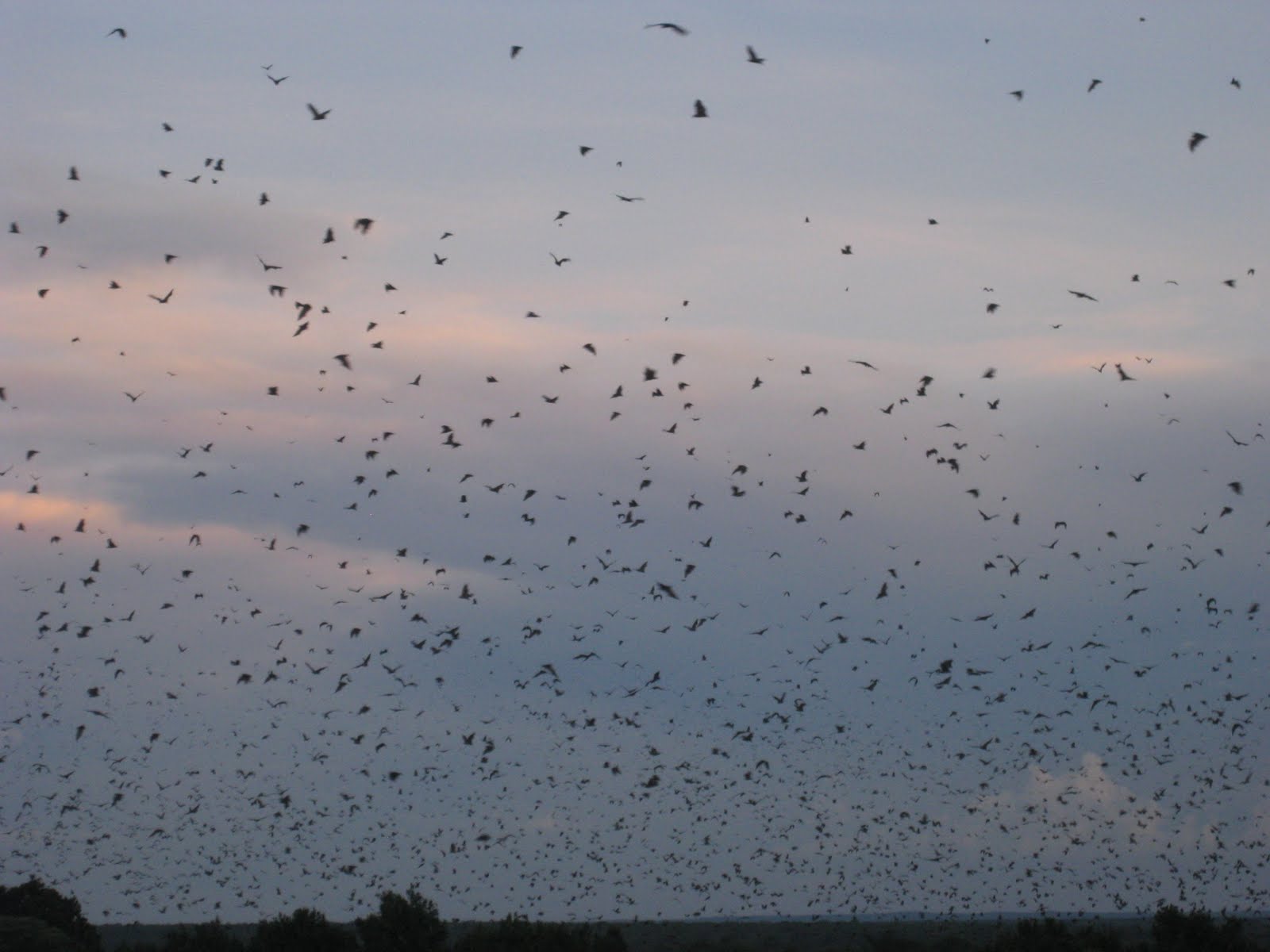
I spent Thanksgiving with my roommate, Brandon, and my landlords, and was amazed that I felt right at home (despite the fact that this was my first Thanksgiving away from Massachusetts…ever). I was lucky enough to see the famous bat migration at the end of November (one of the most spectacular things I have ever witnessed), along with the mysterious and eerie “Africa House,” a colonial mansion that was constructed in northern Zambia by an eccentric (and probably arrogant) Englishman with the hopes of putting into place his version of a British-African empire, and the hot springs that lie twenty minutes north of the grounds.


I was graced by an amazing visit by my friend Keki, my first Zambian friend that I met at the University of Cape Town, and I had a wonderful time showing her my life in the city, introducing her to students and families (Keki is, in a way, the perfect model of a successful Zambian student, on the PhD track), and talking with her about the problems I have seen so far in her country, my frustrations and disappointments, successes and goals.


It was certainly an emotionally exhausting couple of weeks…I finished 31 family interviews over about two and a half weeks, finally completed a pile of vital administrative work for KF, and participated in the final states of our student selection for January. During December, our students are supposed to be beginning/continuing their community service projects, and I am excited to see what they have accomplished when I come back. We are also hoping to have a service leadership retreat with all of the students sometime in January in order to help the students solidify their plans, reflect on the challenges they have faced, and make plans for the future. I was able to accompany Harrison in telling the students whom we picked that they were selected…this came at a very busy and stressful time, and when the first family we told erupted in a sea of joy and emotion, I was once again reminded of what makes this position so unbelievably special. After interviewing all of our families (including those of the five newly selected kids), I feel as if I am at a place where I can finally begin to understand where these students are coming from. I had some unbelievably enlightening conversations with parents and siblings about problems with access to higher education in Zambia, the challenges that kids face in the compounds, the struggles each family is confronting, still, and the hopes and dreams that they had for their child. I think it was during the month of November that I finally realized that whatever it is I do in my life, I need to be around people, interacting with families, sharing information, and learning from others on a daily basis. I think I have really had a chance to take my communication skills to a different level in Zambia, and I was very proud when my students told me that their parents and siblings found it incredibly (and surprisingly) easy to trust me right away, even though I was just a random foreigner appearing in their houses, often for the first time.

KF had to say goodbye to Harrison (who is moving on to another job), and that was difficult. He has developed and fostered such amazing relationships with these students, and I am sure it’s very hard for them to have to keep adjusting to new programs officers and new interns coming in all of the time. It’s a very tough situation. He will be missed very much by all of us. Luckily the new PO coming in, Mwila, seems like an exceptionally smart and hardworking guy. He’s just out of the University of Zambia, and I think he’ll be a fine addition to the team.
On the last day before I began my long journey to South Africa and Boston, KF had it’s annual mentor luncheon. It was wonderful to see all of the inspiring professionals that have had such a monumental impact on our kids and the program. The students all did songs and dances, and one of the minister’s wives came as our guest of honor. I had a wonderful time hanging out with all of the kids after, taking pictures and just goofing around. It was a hectic, stressful day, but in the end, like it all came back to the time I was able to spend with our students. It always does.


My director and I left the following day for Johannesburg, where I was reunited with a fellow Princeton in Africa Fellow, Veda. Veda is doing some amazing work at African Leadership Academy, a two year A-level (pre-college) and leadership/entrepreneurial development program that brings together the best students from across the continent. Florence and I spent the day at ALA, and we were absolutely blown away by the brilliance and diversity of these kids, the amazing successes the academy has already had (getting three quarters of their recent graduates into top schools with full financial need met, for instance), and the inspiring enthusiasm of the teachers and administrators who we met. Our mission was to advocate on behalf of our students, and we are hoping to get at least one student into the program. It would be an unbelievable achievement if we did. I could really feel the uniqueness of this place as I walked around, sat in classes, sat in on an end of the year assembly, and even played ultimate Frisbee in an impromptu faculty-staff match. People really support each other. They are a family of young, hypermotivated, innovative students who will change their countries and their continent. ALA has a requirement that graduates must return to their home countries for five years upon graduation from college, otherwise the student is required to pay back any scholarship aid they received to attend ALA.


The academy has an ambitious fifty year vision, and the backbone behind its success is the philosophy that quality education is a key to development, that young, African leaders are the ones who have the best chance to implement change—not outsiders. It is often during college and university that students begin to solidify their goals and values, and it is hear that the sort of social consciousness necessary for social change can be fostered. I left feeling invigorated. And perhaps more important, I left feeling fairly certain that improving access to quality higher education for young leaders is a cause that I could see myself pursuing in the future.

It is impossible to describe the wave of emotions that coming home has been. I recognize that it has only been five months, but surprising my parents in my basement with a Santa hat, seeing the look of sustained shock, then joy, on their faces was something I will remember for the rest of my life. Thank you, to you who made it possible. It is true, I do feel different at home. And I think I have started to realize the extent of this difference over the past week or so. I am trying to sort out these feelings, and possibly use them to refocus and refuel upon return. But it’s comforting to have been able to see my friends, to see that despite the changes everyone has inevitably experienced, everyone is moving on and moving forward together, albeit differently. I am expecting that upon return, I will be able to use this burst of energy to make some important improvements to my life and work in Zambia. There is a tutoring system that needs more work, a long research project to continue, service projects to help develop, and 10 separate futures to think about. I am eternally grateful for this trip home, and I think it will eventually be a key element to some great successes over the next six months. Happy holidays, everyone.

Thursday, November 18, 2010

Hanging out with Politicians...sort of

It’s been a very unpredictable couple of weeks…I began my assessment project several weeks ago, the long term program review that I will complete by the end of my fellowship. What I am doing is attempting to gauge the impact the program has had on families, communities, and students, using students who were not selected as a control group. The first step is interviewing the parents of our students…it has already been rather difficult to schedule these interviews, considering the fact that most of our parents work during the day, usually late into the evening. I’ve done four so far (which is not good, considering we have 31 families in total and I wanted to finish this by the end of the month). It has been really interesting to hear what people have said about how KF has affected their lives, how they have watched their child grow and mature throughout the years. Several of the parents I interviewed told me that they have been able to make significant improvements to their lives with the money that they would have spent on the education and care of their child. People have been able to put other siblings through school, improve their living situation, buy more food and water, and more. One set of parents even told me that they have been able to go back to school themselves in order to advance their education. I spent a lot of time at this one house; this is a warm, hardworking family that always makes me feel welcome when I come around. My student’s sister showed me her artwork, and when I left I was handed an enormous bag of fresh onions. They told me on the way out that the most important thing KF has done for them is to push them to continue improving their lives, to not sit still and accept their condition. Interestingly, every single parent noticed significant changes in his or her child…confidence, cleanliness, behavior, and more. I began to notice some trends, even throughout just four interviews. KF students were exposing their families to new experiences and ideas (university, the internet, etc), pushing their siblings and cousins to work hard, and even inspiring children in the community to focus on their schoolwork so that they might someday earn a similar scholarship.

My birthday was on November 7th, and I had a pretty awesome weekend. Five people decided to combine their birthdays together, so everyone decided rent out a club/restaurant. It was an incredibly fun night. The next day I got a call from young girl who had been recruited by the Leopards Hill students to deliver me a cake and card. It took a while, but my friend Jen and I finally tracked her down near my house. It was a vanilla frosted heart-shape cake with my name on it from a local grocery store. Wooo! It ended up being an awesome birthday weekend. My first birthday outside of the States…and that didn’t even strike me until later on in the night.

Last week was interesting…we have been assisting two of our students with a research project about TB that is suppose to culminate in an article posted to the UN website. Two of our students are supposed to be working in conjunction with two from a local international school. On Monday we were invited by CIDRZ to watch a performance by a local dance/theater group. They go into communities, begin drumming and dancing until a huge crowd gathers around, and then put on a skit that is meant to education people about HIV and TB. It was all spoken in Nyanja, but I still got the point for the most part. The performance was very interesting…a lot of people in these communities simply lack information—they might have the symptoms of TB but will not be able to recognize what they mean. So creative approaches like this to spreading information could play a huge role in combating disease in the future. Obviously, behavior change is not something that will happen overnight, but these small, grassroots efforts are an important step on the way.

On Wednesday I attended a library opening for the Lubutu Library Project, an organization that has been contracted by the government to build hundreds of libraries across the country. The rains put a bit of a damper on the event, but I did get to shake Kenneth Kaunda’s hand and get a glimpse of the American Ambassador to Zambia. On Thursday we continued with the research project, taking the students to a clinic and a home-based care center for TB. The woman who was guiding us took the students to interview a current TB patient, who was in the middle of treatment. The students learned that TB is an opportunistic infection, which explains why 70% of people that are diagnosed with TB in Lusaka are also HIV positive. The two are a deadly combination.

On Saturday I went to an award ceremony at Leopards Hill. I had tried to make sure all of our parents and mentors were aware of the event, and I think that KF had a pretty good turnout. The guest of honor was the U.S Ambassador, and he gave an incredible speech about education and leadership in Zambia, and about the partnership he hoped to form with the Zambian people. The new U.S embassy (it looks more like a fortress) is right nearby, so the two will be neighbors for decades. I don’t think I was quite prepared for the award ceremony…most Zambian schools have a prize-giving day that is usually coupled with a grade 12 graduation, and students win awards for subjects, athletics, and more. KF literally took over the ceremony. Three of our students (one in grade 8, one in 9, and one in 10) won probably 90% of their grade’s prizes for best in various subjects. The emcee would read off the award, and then say “guess who?” and call the same name again and again. It was just amazing. I was so proud of them. Our students took the first position in grade 8, 9, 10, and 11, and also won awards in sports and behavior. KF is clearly having an impact on these schools. I hope that days like this can be a wake up call to all high quality schools in the area to consider bringing in students from different backgrounds.

It’s been a strange week so far…my car is in the shop for some major repairs, so I haven’t been able to continue with my interviews. I also had a little tough of the flu in the middle of the week, so I’ve missed a bit of work. This just means that the next several weeks are going to be unbelievably busy. And I can’t believe it’s almost December already…

Monday, November 1, 2010

Lake of Stars and Final Interviews

What an incredible couple weeks….every October a lodge on Lake Malawi hosts the epic Lake of Stars Music Festival, which brings together bands from all over southern Africa and the U.K. for a weekend of pure awesomeness right on the beach. This was the only big trip I had planned before the holidays, so obviously I was especially excited. And seeing a new country is always interesting. On Wednesday of last week I went over to the Grassroot soccer house for the night…we were leaving at 5:00 am on a bus to Chipata, a small town in the eastern part of the country. There I met Doug, another GRS intern working in Losotho who would be joining us. Our entire group was about 12-13 people and included most of the Lusaka GRS interns and one of my Zambian friends, Chileshe. We decided to stay up Wednesday night, assuming it was pointless to try and sleep when we had to be up at 3:30. We got to the station relatively early, and packed onto a crowded, slightly smelly bus, and most of us immediately feel asleep. I woke up with a stiff neck a couple hours later, realizing that the bus was pulled over on the side of the road. It had broken down…more or less right outside of Lusaka. It wasn’t the best start to the trip. We had been warned about the buses breaking down, but I somehow thought we would be exempt from this misfortune. No dice. We sat for about two hours (which seemed like 5 on that hot, crowded bus). Luckily, the bus company dispatched mechanics and found a way to fix the bus. So we continued on our way. I tried my best to sleep, but the bus was just so darned hot and the seats were absurdly uncomfortable. Not to mention I was packed in like a sardine with my heavy backpack in my lap.

We drove for about 8 hours through rural Zambia, and finally arrived in Chipata at about midday. As soon as we got off the bus we were accosted by guys trying to sell us Malawian Kwacha. We traded in some money assuming it was legitimate, later finding out that most of it was counterfeit. Oh well…then it was on to the border. We hired two taxis which drove us to the border of Zambia and Malawi, where we met some of our other friends that were traveling separately. We had some complications at the border because one of our friends accidently brought with him his old, expired passport. Luckily we got over in about an hour, and took another taxi to the town nearby, where we would hopefully catch a minibus to Lilongwe, the capital of Malawi. Since there were about 15 of us at this point, we more or less hired our own minibus. The drive through Malawi was very interesting. The country’s terrain is very similar to Zambia’s…dry, open grasslands, low-lying vegetation and occasional collections of trees. However, as we drove deeper into the country I began to notice some very visible differences. There were rolling hills, rough, jagged mountains, browinish-red mud and brick huts. I later learned that Malawi (the “warm heart of Africa”) and Zambia consider themselves to be sister countries. Both share similar colonial histories, speak similar languages, and rely on similar means of subsistence. Malawi is arguably poorer than Zambia, but both seem to have similarly warm, peaceful, and welcoming people. The driver was on a mission….going an average of about 130 km/hr the entire way, and refusing to break for children or animals in the road. Every time we heard the shrill beep of the horn we knew there was something in the road ahead. It was only a matter of time before we hit someone or something. About an hour from Lilongwe we heard the by now familiar beep, and suddenly there was a soft bump underneath us. Shocked and terrified that we had killed someone, we turned around that saw a goat spinning in the middle of the road. The driver didn’t even think about slowing down (we later learned that villagers can get violent when this happens, since goats are a symbol of wealth in the rural areas….even though legally speaking the owners of the goat would be responsible). Somehow we made it to Lilongwe in one piece and met up with Wes and Bryan (a native Malawian), two Grassroot Soccer interns working in Malawi. Lilongwe is a sleepy city that actually reminded me of some of the residential areas of Lusaka. We were to crash at his place for the night before setting out for the lake the next day. Everyone decided to go out that night, but I was struggling to stay awake and crashed at about 8 pm.

We woke up pretty early on Friday and drove out to the bus station to catch a minibus to the Mangochi, the town on the lake that was hosting the concert. We were very, very lucky to have Bryan and Wes there…they arranged the tickets for us, coordinated transportation, and just made everything so much easier. The drive out to the lake took about three hours, and as soon as I saw the enormous body of water with mountains and hills surrounding it, I felt a overwhelming wave of relief. It’s been such a long time since I’ve seen the ocean, and viewing Lake Malawi felt like a touch of home.

We got out of the van, paid the drivers, and checked in with the Sunbird Lodge, the host of the concert. We had decided to camp, and we saw dozens and dozens of tents scattered about the park and beach. We chose a nice spot right on the sand and began setting up our tents, right next to an enormous chitenge and bamboo structure that we later learned was the temporary home of a group of Engineers without Borders. The lake really is a touch of paradise…white sands, clear water, mountains in the distance, and palm trees dotting the shores. Lake Malawi is the most prominent landmark in the country…it runs more or less the entire length of the country, and has one of the most diverse populations of tropical fish in the world. For some reason crocs and hippos are rare, at least in the area we were in. The weather was absurdly hot, so most of us decided to take a swim, gambling with bilharzias, a parasite that lives in many large bodies of water in Africa. Honestly, I wasn’t thinking about this. It was just nice to be swimming in a large body of water again. When the sun began to set, painting the sky in a soft blue-orange glow, I had my first moment of disbelief at how lucky I was to be there.

We walked over to the concert, which was literally right on the beach, and began to explore the area. Outside of the gates there were rows of craft stalls and many local children asking for (or demanding) money of the streams of tourists making their way to the shows. This was a sad reminder that most of the country’s poor citizens were cut off from the spectacular concert that brings so many people to their country every year. There was one huge stage—the main stage--, rows of food stands, and a smaller stage down the beach where lesser-know artists and djs were scheduled to play. Lake of Stars seemed to be the one time when every traveler and expat living in southern Africa comes together. I met people from France, South Africa, and Ireland, peace corps volunteers, backpackers, musicians, and on and on. It was almost overwhelming how many amazingly interesting people were at this concert. I even ran into some of Mary Reid’s friends who were working on a health project in Zimbabwe, including one girl who is good friends with one of my friends from Bowdoin. Crazy.

On Friday we saw Oliver Mtukudzi, the legendary artist from Zimbabwe, who absolutely rocked it. We also saw other more traditional African bands, and my favorite artist form the festival, Tinache---a Zimbabwe born guitar player (sort of like the Jason Mraz of Africa) who was touring with his goofy British drummer. It was an awesome introduction to the festival.

On Saturday everyone woke up at about 8:00 am (by that time the sun was too oppressively hot to sleep). We spent the day relaxing by the beach and the pool, swimming, and meeting new people. I saw some cool local acts on the smaller stage. What’s great about Lake of Stars is that the organizers of the festival try to involve the local community as much as possible, so there were some bands playing from local schools. A lot of the artists also spent time in local communities at orphanages and schools. I suppose it would have been better to let native Malawians into the show for free or at a discounted rate, bit I guess this was asking too much. Saturday was an epic day and night…the Noisettes, an Indie/rock/jazz band from England with an unbelievably talented singer from Zimbabwe were playing, and they put on an incredible show. The singer was sort of a spectacle….apparently she has been doing her thing long before Lady Gaga was popular. I even tried to crowd surf (and failed miserably). Later in the night the dj on the smaller stage came on, and I ended up staying up until sunrise.

Sunday was another relaxing day by the beach and the pool. We met this really interesting girl from England who was getting paid by Trident to go to 30 music festivals in 30 weeks. She told us that out of the 20 or so she had been to so far that this was her favorite one. She even interviewed me and two of my friends for a video (check it out on my facebook wall!). Later in the afternoon Tinache was playing an acoustic set. We sat there as the sun was beginning to set, listening to some awesome music, and I again couldn’t believe how lucky I was. After the show Tinache’s drummer even let me play his bizarre plug in acoustic box drum thingy, and we had the chance to meet Tinache himself. Later in the night the Noisettes were playing an acoustic show on the smaller stage, which was just unbelievably awesome. They brought up a group of local kids onto the stage, and you could see the shock and joy in their faces. Sunday night was another fun night…we danced to artist after artist on the main stage, and I also somehow convinced the security guards to let in some Malawian teenagers who had been coming every year but had never seen the concert before.

We left on Monday. I was exhausted and drained, but so happy and grateful for the weekend. Definitely one of the most memorable of my life. Two University of Cape Town grad students (Caps, from France, and Darla, from Rwanda) joined us for the ride back to Lilongwe. We took a different route back to the capital, snaking around rolling hills, traveling down in and out of valleys, and seeing some stunning views of this very beautiful country. Unfortunately I got a bit sick on the way home (took a malaria pill on an empty stomach), but luckily the driver pulled over for me. We got back to Lilongwe by late afternoon, went out for Indian food, and then passed out early.

We took the 6:00 am direct bus from Lilongwe to Lusaka, which actually ended up being relatively easy. I sat next to a Malawian woman with a baby (who somehow only cried twice the entire ten hour trip). Toward the end of the trip we were talking about Malawi and Zambia, and she told me all about her family in Lusaka, about how similar the two countries were, and about the kinship citizens felt for each other. We finally arrived back in Lusaka at 7 pm.

Again, it was just an all around spectacular trip. I traveled with an amazing group of people, met some great people along the way, listened to some incredible music on one of the most beautiful lakes in the world. I have to admit that it was a bit tough getting back to work, especially after missing four days of it.

Work has been exceptionally busy since being back (hence why I have been behind with my blog). We are right in the middle of the final round of our application process, which means we have been interviewing 14 student finalists with their families. The survey that I helped develop is pretty extensive…it asks a lot of the student, including comments on leadership, problems in their communities, challenges they have faced, and more. It also demands a lot from the parents/guardians. Over last weekend and week I completed a total of 11 interviews, three with my director, five with our finance officer, and three with our programs officer. The interviews are often exhausting….they usually last about an hour, and they require us to pry a bit into the lives of each applicant.

It was very interesting for me to see which questions students understood and which ones they didn’t. The one that I figured would be the simplest (and most important) was the most difficult for almost every applicant. The last question we asked of the students was, more or less: “Why should we pick you?” And almost every student interpreted it as: “What reasons should KF have for picking you?” So they would answer by saying: “so I can go to school,” or “because it would really help my parents.” Sometimes it took 20 minutes of rephrasing the question to get at what we were really looking for.

It would be impossible to describe every detail of these interviews, but I think it’s worth giving some highlights. Some candidates were not ideal for the program…they didn’t give us thorough answers, and some did not seem as vulnerable as the others. But then there were some students who seemed to possess an unbelievable level of confidence and maturity for their age. One girl, who blew me and our finance officer away, gave us a detailed description of how corruption is bringing Zambia down. This same girl later told us that she thought that she had the courage to believe that she could become something great in her life. She was living with her uncle, who is no longer working and is supporting 12 people on money made on side jobs. This includes 5 orphaned children. He claimed that his biggest worry is that if he doesn’t find help with her school fees he may have to send his niece back to live with her parents, who are very poor and might marry her off. At 12 years old.

Then there was a boy who lives with his family in a tiny house in one of the compounds in the city…his father sells scrap metal for a living, and income is, obviously, unpredictable. The boy’s father seemed so genuine and hardworking. He told us how he felt like he failed his kids because he has been unable to provide them with certain things. He used to want to be an engineer, and has a passion for tinkering with gadgets. We figured that our pretty quickly when we walked in and noticed the used car battery the family was using to produce electricity for the household. That same father later told us that if his son was picked, he would always remind him to remember where he came from and to give back to your family and community whenever he had the chance to do so.

Every family seemed to have a similar story…they were working too hard, for not enough money, and trying to support too many people. And every student we interviewed was intelligent, hardworking, and a great source of pride to their parents and guardians. Most of them had no idea how they would send their kids to secondary school. We interviewed 14 students and families in total, and we can only pick 5. Any one of them would be a real asset to the program. But we are limited in what we can do, and that’s really difficult to come to terms with. Lake of Stars was phenomenal, but jumping right back into the heart of KF’s application process, and meeting these promising kids and their resilient families,, brought me back down to earth almost immediately.
Tuesday, October 12, 2010

October News

It’s been an awesome couple weeks. Last Friday our president/ co-founder arrived with his fiance from Ghana. They are currently living in Ghana because our president is on a medical fellowship there. They also brought along one of our sponsors, a man from California who has been sponsoring three of our students from the beginning. I picked them up from the hotel and we went to Ibex Hill, one of our schools, for a big ceremony and presentation in front of the entire school. A local bank, Stanbick, donated a ton of money to KF for grade 11 tuition and book costs, so there was a celebration to honor the donation and the arrival of our president. The kids did a traditional dance and a play that they had been practicing all week, and even included dozens of other Ibex students. Everyone was clapping and hooting, and Oliver (yes, my roommate and president have the same name), the head of Stanbick in Zambia, and one of our grade 11 students all gave speeches. It was an awesome day, and everyone was happy to see the Oliver again.

Later on I went to play soccer with a Zambian guy Bob I had met at a cafe. The way he described it to me was vastly different than what it ended up being (he invited me along to play some “amateur soccer with his friends"). So we pulled up to this new Olympic stadium that was built in order to train athletes in Southern Africa, where there were two professional-looking teams in uniforms warming up. He threw me a jersey, ran out, and told me to sub in later in the game. I was definitely the only mzungu there, and everyone was laughing and giving me the thumbs up. I finally got into the game at the end and they threw me on defense guarding the one fat guy on the field (who also happened to be a former Zambian national team coach). I actually didn't play all that poorly, mostly trying to stay out of the way (these guys were GOOD). After the game we went to the park social club, where people gather after sporting events. Both teams were hang out and relaxing, having drinks. I was introduced to the group as the "house mzungu, imported all the way from America.” Everyone there was so friendly and welcoming, and even my soccer skills have been steadily declining since high school, they invited me to come along again whenever I want.

On Saturday I had a very productive meeting with Oliver. It was great to discuss the job and some of the challenges I have faced here in person. Later in the day we had a lunch at the Mexican restaurant with all of the grade 11 students. It's a really cool place because the owner uses it to fund a nonprofit on the side (Teach to Fish, which trains young Zambians in entrepreneurial and business skills). They gave us a tour and a pep talk, and we spent the afternoon explaining to the kids what Mexican food is and just talking and having a good time. After that I drove one of the grade 11 students to visit his sister. This student is amazing. He's very religious, unbelievably mature and intelligent. He has had a horrific upbringing (his dad used to abuse his mom and sister), but he has grown through it all somehow. He’s a deep thinker and also writes poetry and draws. We had an awesome conversation about life and love and all sorts of things. Each one of these students is so unique and each has a story, and I have really loved learning about them over time.

Last week I spent a lot of time bringing our president and his crew to see the kids and the different schools, including one of the basic schools we partner with. One of our high schools is considering adopting a scholarship program, inspired by KF, to bring needy kids to their school. Of course, the ultimate goal of this program would be to have the schools be doing this without our help, or at least with a minimal amount of our assistance. I think that it’s very encouraging, and I am excited to see how these partnerships continue to develop. I wonder if it would be easier to get local support if scholarship efforts were spearheaded by Zambian schools instead of NGOs. We then went to visit two of our mentors, one American and one Zambian, which everyone seemed to enjoy. Once Oliver left for Ghana, I took our sponsor to visit the three students he funds…he seemed to have great conversations with them about school and their career plans. We also went to visit one of the student’s homes. It was a busy, busy week!

Another important event of last week was delivering the letters to partner basic schools about who we selected for interviews. Many of the administrators were unbelievably happy and proud that their students made it to the final round. One school in particular, however, stood out. N’gombe Presbyterian School is a community school, one of two that we drew from during this application process. We only very recently started accepting applications from these schools, which is already a big step for us. Community schools are the most poorly-founded schools in the city. They often get support from churches or international donors, and are also often for the poorest of the poor. They are different from government schools, which on the whole still have poor quality, but still are quite different from community schools. As far as I know, government schools do charge a small yearly fee, and the a lot of the time the poorest individuals cannot afford even this. So community schools fill that gap…often, they are staffed with volunteer teachers, have one or two classrooms, and have students from very troubled backgrounds (many are orphans). The facilities are often crumbling. It sometimes takes students 3-4 years to pass from grade 7 to 8 due to poor teaching.

One student from N’gombe scored exceptionally well on our test, which means he was selected for an interview. This is the first time someone from a community school made it to the final round, so delivering this letter was particularly special. The school was dirty, the buildings were bare, and all of the students seemed to be lumped into big classrooms. We got plenty of stares, Harrison in his suit, me with my skin color, walking into the office, and the head teacher was truly shocked to see us there. We even had the chance to meet the young man who we will soon be interviewing, a shy, polite, scrawny young man with a huge cross necklace around his neck. This seems to prove already that students with natural intelligence and/or an exceptionally strong work ethic can do well at these schools, despite the desperate conditions they often find themselves in. It’s very exciting.

It’s been a fun week and weekend as well. On Wednesday I joined my friend Chileya (she offered me a free ticket, so it was hard to pass up) for a concert at the Alliance Francaise, a local French cultural center. Aly Keita is from the Ivory Coast, and he plays this enormous xylophone instrument that he constructed himself. He put on quite a show, all by himself. Some of the sounds that came out of that instrument were stunning. The perfect example of someone who has long ago mastered an instrument. I even had the chance to meet him afterward and utlilize my long outdated French skills. I somehow got across to him that I play the drums, and his face lit up as he started playing the air drums, saying “you better keep playing!” in French. It was an awesome night. This weekend I played some ultimate Frisbee at the American School, went to a traditional and prize-giving day at one of our schools (three of our students won academic awards, and all of them were involved in the songs and dances), and on Sunday went to the Reptile Park for a huge birthday celebration for Maxime where we went swimming, looked at some crocs, and grilled crocodile burgers and impala. The weather is starting to get unbelievably hot…definitely not what I’m used to in October. Luckily the heat is all dry, but still, midday is brutal here.

This week I have been working on a community service manual for our students service projects, putting finishing touches on a parent survey for my long-term research project, and scheduling application interviews for next week. Then it’s off to Malawi this weekend for the Lake of Stars concert (20+ artists are performing from all over Africa, and I’m going with a group of about 20 people). So exciting.

Wednesday, September 29, 2010

A=A

Last weekend KF tested 31 students (English, math, science, and verbal reasoning) who are applying to the program. It was incredible to see this enormous group of kids, some nervous, some enthusiastic, but all very proud to have been selected to this round of the application process. It’s funny to think that all of our current students started out here…they all seemed so young! When I walked into Leopards Hill School, two of our grade 11 students, Gaella and Abram, were standing in front of a class of students asking them questions, giving them advice, and trying to inspire them to work hard. “If you work hard, you can be here with me, with all of us,” she said. The students were also blown away by the cleanliness of the school, the athletic fields out back, and the free chicken and chips (French fries) lunch that we gave them. It is true that we can’t pick every one of these students, but it seems as if just getting this opportunity was very meaningful for a lot of them.

The director and I were sitting around with a group of teachers from our partner basic schools while the students were testing, discussing ways to make the application process smoother. One of the teachers brought up the fact that some of the other teachers in the school were complaining about not getting paid for helping with the application process. Then our director began talking about how important a service this is for KF, for these students, how sometimes people have be willing to sacrifice on behalf of others without anything concrete in return, and most importantly, how deeply we as an organization appreciate and value their help and input. One of the other teachers began speaking about how this was just not something that Zambians often think about and how discussing it is important. She acknowledged that, in her opinion, most of the people she knows are self-centered, and only focused on their own concerns and those of their families. The idea of a social consciousness, she was saying, was not something that people accept or subscribe too. We all began discussing ways to get the schools more involved in the program, and more importantly, ways for us to acknowledge and show our appreciation for their work. These teachers were not doing this for anyone other than the students sitting in the next classroom. They refused to let their own children apply to the program, and they showed immense appreciation for what the Foundation has done for their pupils. I hope they can inspire others to view KF in the same way.

The other day I went out for a couple drinks with one of my Zambian friends, a girl who studied in the UK and came back to Lusaka to work for a local publisher. I’m not sure how it came up, but we got into a huge debate about climate change (I was adamant that there is concrete evidence to prove it exists, and she was firmly of the opinion that it was completely over exaggerated or possibly not real at all). Then, some other people in the bar joined into the conversation…some people on my side, some on my friend’s. I found myself getting utterly frustrated to the point of exasperation, and kept my mouth shut when they all started talking about evolution (nobody at the bar believed in it, which is not surprising considering the fact Zambia is an ultra-Christian nation). At first I sort of brushed it off as a cultural difference, but then I sat back and realized that these same debates occur all over the States and the West. But It was so interesting to hear people discussing these issues in a super Christian environment, in a region that arguably would be one of the most affected, environmentally and socially, by climate change.

Later in the week I had lunch with a young man who had returned to Zambia after spending most of his life studying abroad (South Africa, India, the UK). He was a pharmacology major and did his masters researching the link between cancer medications and the treatment of malaria. I have been trying to set him up with some local contacts in public health (there are a TON of them here), because Kay is committed to putting his degree to work in an area that needs it most, his home country. I was asking him what it was that made him come back after so many years away, especially when he could probably be making a lot more money in the West. “People here believe that A=A,” he said. “They never question things, they never push things further. They accept the conditions here for what they are.” He went on to talk about disease and death. “There is so much death here. People choose to live with it instead of making small changes to their lives that could counteract it.” He is committed to changing that in every way that he can. And I have am confident that people like him will be the ones to actually implement change here. NGOs can only go so far. At a certain point, it is the local populations, the younger, well-education generations that will have to take control of the politics and social problems in this country if poverty and disease are to be effectively combated.

This weekend I returned to Victoria Falls (I had been there on a trip a couple years back when I was studying abroad in Cape Town). It was a short five hour drive through the bush from Lusaka to Livingstone, and the four of us took turns driving. I have to admit that I never expected to be back in Livingstone, and it was so bizarre to drive down the same roads I had been on before, this time with a completely different mindset. Everything looked so much smaller than I remember, I guess because my previous trip to Livingstone was such a blur (bungee jumping and getting attacked by a baboon were the highlights of the trip). We stayed at a cheap backpacker, and after dropping off our stuff we drove down the lone road to the entrance of the national park. On the way we spotted a big herd of elephants on the side of the road (which could have been more terrifying if we had known at the time that a Congolese woman was trampled to death by an angry elephant on that very same road). Ahhhhhh! Since we had Zambian work permits, we got to pay the local rate ($1 as opposed to $20 for foreign tourists). Seeing the falls this time was vastly different. It is the dry season now, so while you don’t have the roaring, rushing streams of water and mist blocking your view and soaking you, you do have the chance to actually see the canyon that the river has carved out. It was spectacular in a different way, and just as awe-inspiring as last time. We spend the afternoon viewing the falls…the only semi frightening moment came on this narrow bridge which crosses over the canyon. There was an enormous baboon sitting in the ledge cross-legged staring at everyone that walked by. We asked a Zambian guy what his name was, and he said “Josepher” (I guess a combination of Joseph and Christopher?). Why not? Somehow we made it by him without forcing us to answer an impossible riddle or straight up attacking us.

Afterwards we drove out to the Royal Livingstone Hotel (and absurdly and unnecessarily excessive hotel on the river) for some drinks on the veranda (a rare, one-time treat), listened to some flute playing, and watched the sunset over the river with hippos snorting in the distance. We had met a British girl named Jess at the falls, and she and her friend Nathaniel joined us at the hotel. Nathaniel was a fascinating guy—he was spending a year traveling around Africa doing research for his PhD from Yale, which is centered on the reasons why African leaders choose to and not to stay in power. He had met the presidents of Mali, Ghana, and Guinea Bissau, and seemed to be traveling only with a cowboy hat and white t-shirt. He was also sporting an impressive moustache. After that we met up with Mary Reid at a braii (awesome to see her again!) and then hung out at the backpacker with a huge group of Norwegian nursing/physical therapy students. How ridiculous the backpacker life is…

The next day we went back to the falls and hiked down to the boiling pot, the rocky area down at the bottom of the canyon at the edge of the river. The hike down was unbelievable…lush, tropical vegetation, crystal clear streams, and baboons screaming and running around us (luckily no attacks this time, haha). We spent the morning taking dips in the small area of the river that wasn’t dangerous (the Zambezi river has some pretty terrifying rapids) and basking in the sun at the bottom of the canyon underneath the bridge I had leapt from a year and a half ago. Then we hiked back up to the top of the canyon and walked across the relatively dry riverbed, through steams and over slippery rocks, to Devil’s Pool, a pool of standing water right at the edge of the falls. We spent the afternoon jumping from the rocks into the cool blue water and sitting at the edge of the pool looking down into the canyon. After that Jess joined us for a ride back to Lusaka, and we got back late Sunday night with no problems at all. A cheap, awesome trip!

Now we are all preparing for a visit from the president of KF. It’s going to be a busy weekend, but I am really looking forward to having the entire staff together to talk about the Foundation and make plans for the future. Almost three months in. I’m a quarter of the way through my fellowship, which is just unbelievable to me. The time is flying by here, and there is so much more to do.

Friday, September 17, 2010

Anything but Familiar

I think that in many ways I was prepared for the beginning of September being a strange/difficult time. It is true that being here has removed me from the ebb and flow of life that I am used to. Here, September doesn’t mean changing leaves and the beginning of a new year. It means that the weather is heating up, that the students are in full swing in term three, that the rains will be coming in only two short months. Being separated from people back home can be easier when there is very little in your immediate vicinity to remind you of them, and life in Zambia really is a completely different world, a different reality almost. Still, the fact remains that back in New England, life is going on, people are starting school and jobs. The fall is here, which to me has always represented a new year, opportunities, excitement, family and friends. It’s so surprise to me then that my first bit of true disorientation has come. I knew there would be times when it felt like things were moving along back home without me. This is an inherent part of up and leaving everything you know for a year to live and work in a foreign country. Life goes on as usual without you, and it’s something that anybody doing this type of work must come to terms with. Still, I am trying to remember that it would be wholly unnatural to not feel this way from time to time, to not miss everything and everyone that I know and love when they are so very far away. I suppose the key is accepting these feelings, acknowledging them, and moving forward regardless. This is something I am learning to do, and it inevitably has made me stronger.

Work has slowed down a bit the last couple weeks. I’ve been attempting to develop a tutoring plan for all of our 31 students, focusing on the grade 11s (and on English and history) to help prepare them for the vital exams at the end of next year. There has been a lot of trial and error (I am not a teacher, obviously), and I think it will take some time to really fall into a groove with this element of my job, to feel like I am actually helping the students improve in their weaker subjects. It has been frustratingly difficult trying to arrange schedules with the schools (there are new programs starting at each of them, so it won’t be as easy to just show up for three hours and give extra help on a set schedule). I have also tried to be careful not to make it seem to the administration like I am giving KF students special treatment, so I have invited any other students along for extra help as well. Again, I am trying to be patient and realistic about what I can really do in this respect. Lately I have noticed a bit of a change in my relationship to KF’s students. It’s difficult to explain, but I really do feel that they are beginning to trust me. Opening up is one thing, but trust is vastly different. Students have confided in me on numerous occasions, and it’s these moments more than any other that snap me away from feeling homesick or nostalgic and back to reality.

Last weekend I felt the need to get away, so my friend Brandon and I hopped on a trip to the Lower Zambezi (a river valley about two and a half hours from the city). My friend Chileya who works at the magazine I mentioned earlier has a friend who owns a yet-to-be-opened lodge right on the river, which means we were literally the only tourists there. The drive out to the river was stunning…the road snaked around hills and mountains and eventually down into a valley, past tiny villages, random monkeys and baboons, and endless expanses of dry, dry vegetation. The road to the lodges leads up to the river to the north, and to cross it you have to drive your car onto a pontoon (a small, rickety ferry). As we are about to drive onto the dock the pontoon driver approached us, seemingly telling us that Brandon would not be able to cross with me. We looked around trying to figure out how he was supposed to cross (there were no other boats or bridges in sight), and began arguing with the man, all in vain. After about ten minutes we finally understood that they didn’t allow passengers in the cars (I later found out that this was to avoid unnecessary deaths in case the pontoon sinks…comforting, haha). When we finally crossed the river we drove down a dirt road for about a half hour, past enormous baobab trees and a massive banana plantation, and finally found the turn for Kwalata Lodge (the sign was painted on a tiny wooden post). After driving into the bush for twenty minutes, we arrived at Kwalata. The site was beautiful…right on the mighty Zambezi River (which forms the border between Zambia and Zimbabwe and leads all the way down to Victoria Falls), with plenty of grass and trees, a few chalets and tents scattered about, and a very small amount of people. The owner of the lodge, a guy named Regi, spent time in the States studying at Kansas. He is a pretty prominent businessman in Lusaka and is making an attempt to bring the sort of lodge/safari vacations that usually only target tourists to regular Zambians.

We spent the day sitting on the river, fishing, reading, and relaxing, which was unbelievably nice and exactly what I needed. When dinner time rolled around the owners of the lodge drove back with two goats for dinner. I decided to watch the slaughtering process out of curiosity (I rationalized it by thinking that if you can’t watch your food get killed then you probably shouldn’t be eating it). Sadly, the knife the lodge workers used was exceptionally dull, which clearly made the process more painful for the poor goats. Even more difficult to watch was the first step (before killing goats, the common practice is to cut off their testicles to avoid getting urine on the meat). Somehow I was able to stomach the whole thing (including the skinning process), and the goat ended up being delicious. As dinner was being prepared I sat by myself at the edge of the river watching the blood red African sun set over the Zambezi, reflecting on where I was, and eventually just letting my mind clear and take in the scene before me.

That night we sat around the fire with the lodge owner and his family, eating, talking, and playing music. Brandon and I started a random drum circle with some Zambian students that were at the lodge for a retreat (complete with bongos, guitar, and whatever pots and pans we could find). On Sunday we all slept in, made breakfast, and then went for a boat ride on the river. We spotted plenty of crocodiles and a huge group of hippos that seemed to be protecting a baby nearby (which meant they were staring at us with angry eyes until we passed by). The drive back to the city was quiet and peaceful, the sun setting slowly over the hills and mountains, the roads virtually empty. It was a much needed break, especially since the next couple weeks are going to be crazy busy. This weekend we are administering a test to 38 students who are applying for a scholarship starting next year, and after that we will be short listing students and conducting interviews at the homes.

It’s September, and my life is anything but familiar. It’s disorienting and perplexing, but in many ways terribly exciting. I knew the time would come when I things wouldn’t quite line up like I’m used to, and I am working through it. I am looking forward to getting back on track next week.

Friday, September 3, 2010

Two months!

Lusaka is a city of highs and lows. One week I found myself feeling frustrated and overwhelmed, and the next I found myself feeling energized and invigorated. The past few weeks have been some of the most fulfilling times I’ve had in the past couple years. There was nothing in particular that sparked this feeling….in fact, I first realized the change at a completely random moment. I dedicated last week to finishing up work experience debriefs and meeting as many of KF’s mentors as possible to show my face, distribute the newsletter I put together (with the students’ help, of course), drop off term two grades, and make sure that each mentor was making an effort to connect with his or her student. I found myself driving all over the city, meeting with an established Zambian medical doctor, the head of the Law Association of Zambia (who gave rave reviews of the two students we sent there), a woman from South Carolina and her Zambian professor husband (she insisted on me taking home some fresh spinach from her garden), the director of a beautiful lodge and plant nursery (she wouldn’t let me leave without taking home an enormous house plant), the manager of a local vehicle repair shop, and many more. I was about to start the car after having the plant thrown into the back of my rugged SUV when I decided to sit for a minute, take a step back, and think about what this has experience has really been so far. After a month and a half, I feel completely comfortable arranging dozens of meetings on my own, driving across the city to unfamiliar neighborhoods, and interacting with so many people whom I have never met. I feel perfectly happy waking up, arranging my own schedule for the day and the week, writing reports, and taking the initiative to branch off from my set job description. I am beginning to wholeheartedly embrace the flexibility and unbelievable independence that are essential for this position—the same things that made me feel overstretched a week before. I am settling in to a post that is profoundly unique, and beginning to appreciate this opportunity for what it truly is—the chance to grow on my own, to learn, and to produce tangible successes that I and the staff here can be very proud of. The contradictions and frustrations of this sort of work and the Zambian educational system are no longer holding me back. In fact, I have started to embrace them too, as part of this amazingly difficult yet exhilarating experience. And everything always comes back to the students. Even if I wasn’t feeling this way, they would still make everything worth it. I am proud to be part of an organization that allows its workers to form meaningful relationships with the people it has committed to supporting. That is probably the most essential element of this job, and its drives the organization.

Last week I was checking in with a guy John who works at INZY, an innovative local photography studio. We were talking about one of our students and the general work of KF when he suddenly sat still for a minute, took a deep breath, and told me that he genuinely believed that what we were doing was worth the effort. He was an orphan himself, he said, and he had to work incredibly hard to be where he is today. INZY also films documentaries for BBC and publishes a hip magazine with a mission to celebrate Zambian art, fashion, and culture and to bring to the surface unique and inspiring stories that are sometimes forgotten. I actually noticed startling similarities between KF and INZY…both are small organizations with staffs that are forced, due to limited resources, to do a little bit of everything. I was honored when he asked me to do an interview on behalf of KF for the next publication. I met with Chileya, a Zambian girl who had just returned to Lusaka after studying in the UK, over coffee. Though I gave her some information about the organization, I also mentioned that it was probably more appropriate for her to be speaking to the Zambian staff, considering this was a Zambian magazine committed to focusing on Zambian stories.

On Friday, I followed through with a contact I met at a local cable provider and appeared with our director and Bwalya, a grade 10 student, on Q FM, one of the most popular Lusaka radio stations. At first I was a bit worried that the DJ was going to misinterpret KF’s mission and what we had hoped to get out of the interview, but he actually asked all of the right questions and let Bwalya and our director do most of the talking.

I came back home on Friday feeling like I finally understood what this fellowship could be, and also acknowledging that the next week could be a tough week and that I would have to learn to embrace both the highs and the lows here. Last weekend was very busy because Mary Reid, the other Zambia Princeton in Africa Fellow who is working for a voluntourism company in Livingstone, was visiting for the weekend. She came to Lusaka to get her work permit but ended up staying for 3-4 days. It was awesome to see her and bounce ideas off of each other about Zambia and our respective jobs…Mary Reid’s post is very similar to mine—it requires a lot of flexibility and individual initiative and seems to have similar highs and lows. We went out to Mexican, played some poker, enjoyed the Lusaka nightlife, visited City/Soweto Market (the dirty, cluttered, sprawling market in the vicinity of the town center) with James as a guide, ran the Hash, went to a birthday party for one of the grassroots employees, and saw the last games of a huge rugby tournament featuring teams from all over southern Africa. It was fun showing her a bit of what my life is like here, because I know that despite the similarities she is having her own unique experience in Livingstone (and now I’m even more excited to visit!).
This week has been a little slow…this kids are going back to school next week, so I’ve been looking at their grades to start creating a preliminary tutoring plan for their weakest subjects and meeting with more of our mentors. With a few exceptions, our mentors are very involved in the lives of their respective students. They take them to their homes, have met their families, and monitor their grades and overall growth. After meeting the mentors I have began to understand how important this component of KF is, how influential it can be to have an older, successful individual taking an interest in these students’ studies and lives.

On Tuesday I gave a presentation at the American Center on the value of the liberal arts, using Bowdoin as a case study. I felt like I was right back at school in the Admissions Office, though the challenge here was selling an educational philosophy that I took for granted as being the best to a group of people that have never been exposed to it before. It was difficult convincing to people that a liberal arts degree does not necessary train you for a specific career but instead teaches you skills—leadership, critical thinking, social engagement—that can be applied to any career path. I backed up my talk with research on top-rated academic programs (many of which subscribe to the philosophy of the liberal arts), job and graduate school placements, and the many advantages inherent to having a close social and academic community. The students there seemed very interested, and I had a huge group come up to me afterward to get my email address. I think I even convinced one kid to apply to Bowdoin!

Last night Oliver and I had the Mwenyas (my host family) and our landlords (Bill, an English guy who has been here since 1965, and Rhetta, a strong-willed Capetonian woman) over for a classic American dinner. We grilled burgers and corn (which ,despite some difficulty with the grill, actually ended up being delicious). I’ve really missed my host family, and it was good to see Danny before he leaves for college in Canada. I am so confident that I will stay in touch with them throughout my time here.

The last couple weeks have been remarkable. I understand that life here is going to be full of ups and downs, that things could change very quickly. Yet, I feel a new sense of independence, a fresh confidence in my abilities. And I continue to be surprised every day.